
Approaching another growing season, you may find yourself clearing space on your windowsills or in the greenhouse to germinate seedlings ready to plant out. If you enjoy garden pots diy projects, this is a brilliant time to recycle materials and turn them into handy containers. Rather than buying new seed pots, make the most of the resources at your fingertips. Use these tips on how to make homemade pots with waste cardboard, newspaper, and other household items. Because the cardboard and newspaper are biodegradable, they can later be torn up and added to your compost bin as brown waste.
Why do it?
Not only is this a cheaper way of doing things, but it can also benefit the plants. Because it means the roots aren’t disturbed when planted out. This is because the whole thing can be planted in the soil where it will break down and decompose. It will rot naturally and allow the roots more room to grow as needed.
Homemade containers also help you match the pot size to the plant. You can make deeper pots for sweet peas or broad beans, and shallower ones for salad leaves and herbs. That flexibility is ideal when space is tight or you are creating a mini kitchen garden on a balcony or patio. It’s a smart way to start off young vegetables alongside flowers without buying extra plastic trays.
Using Cardboard
Create crafty containers using boxes that you’ve accumulated from any deliveries. This method also means you may have to get a bit creative with shapes and sizes, which is half the fun. You can sit these diy garden containers inside old seed trays or on saucers to keep things neat.
The big thing to remember with any kind of container growing is drainage holes. You’ll need to pierce holes in the base of the container to ensure water isn’t sitting stagnant at the bottom. This is especially important if you’re lining the box with plastic, as the water won’t have anywhere to run.
Due to the cardboard material of these planters, you may think they’ll get soggy with the water. But the porous materials mean it can dry out quickly. Keep an eye on moisture levels, topping up with water when the compost surface feels dry to the touch.
Making Cardboard Pots
This method of using a cardboard box allows you to plant the seedlings straight into the ground when they are ready. The cardboard will fully break down and decompose. Now as the seedlings grow and as you water them, the box will lose structural integrity.
Cardboard will be able to give you a slightly firmer finish than the newspaper method. It’s a good choice if you want to stand the pots in trays or group them together as temporary garden pots on a bench or staging. They work nicely alongside traditional terracotta pots, giving a mix of permanent and temporary options on your potting bench.
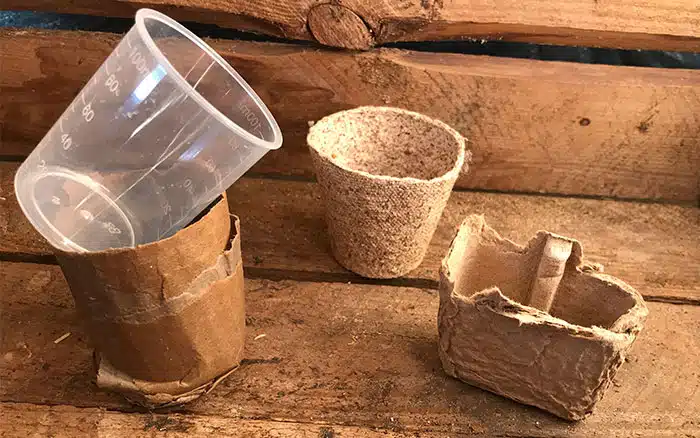
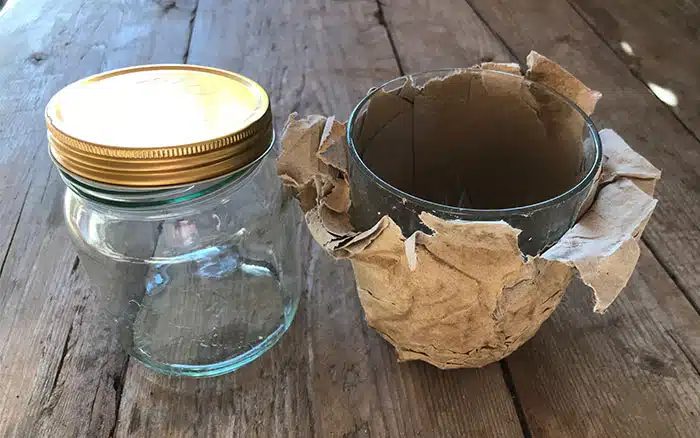
- Get hold of pieces of cardboard and saturate them with water. This will make them malleable and flexible enough to mould around a glass and achieve the desired shape.
- Once you have moulded the cardboard around the glass, leave it to dry. Then remove the glass, and, hey presto, you’ll have the desired shape.
- Keep the containers in a dry, warm spot and they’ll dry nice and quickly, ready to be sown. A sunny windowsill or greenhouse bench is ideal.
- Don’t let the cardboard dry completely, as it will be very hard to remove from your mould. Allow it to dry enough to hold its shape, otherwise it will get stuck.
A top tip is to use a tumbler for some homemade pots, and a longer glass for some others. These are perfect for longer rooted plants like sweet peas, broad beans, and sunflowers.
You can even dedicate a few to herbs so you have fresh flavour to pick near the back door.
Toilet Roll Tubes
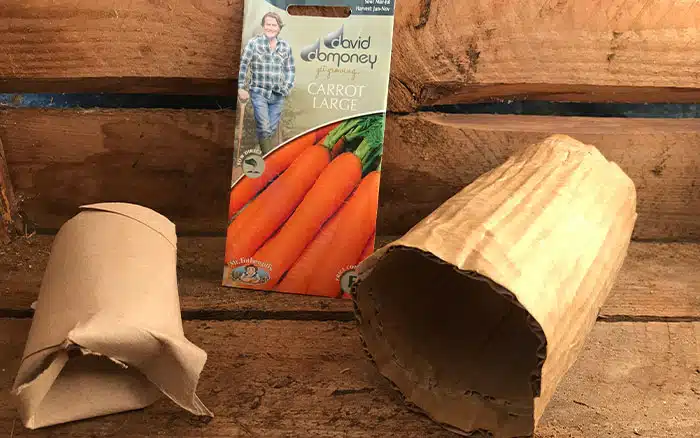
One of my favourite recycling tips is using household cardboard, like toilet roll tubes, as a container for growing seeds such as carrots. They’re also great for long-rooted vegetables like parsnips and beetroot, which dislike having their roots disturbed. You can do this easily by cutting the bottom of the toilet roll cardboard and folding it inwards. This will create a base to hold the soil.
You can also do the same with kitchen roll tubes. They are a bit longer, so just cut them in half and repeat the folding method at one end of the tube. These simple pots are perfect for a small diy project on a rainy afternoon. And children love helping make them.

Newspaper
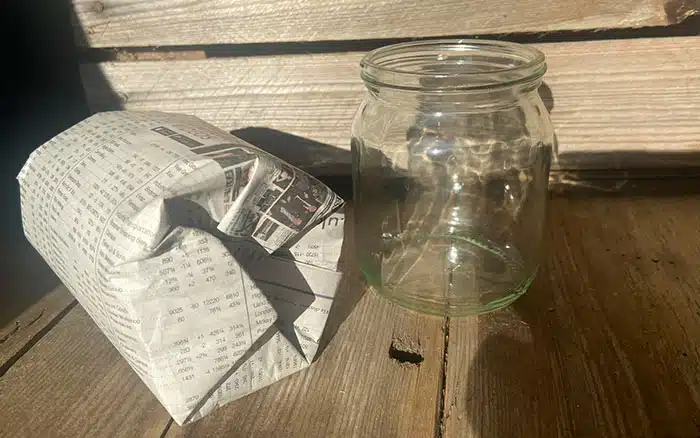
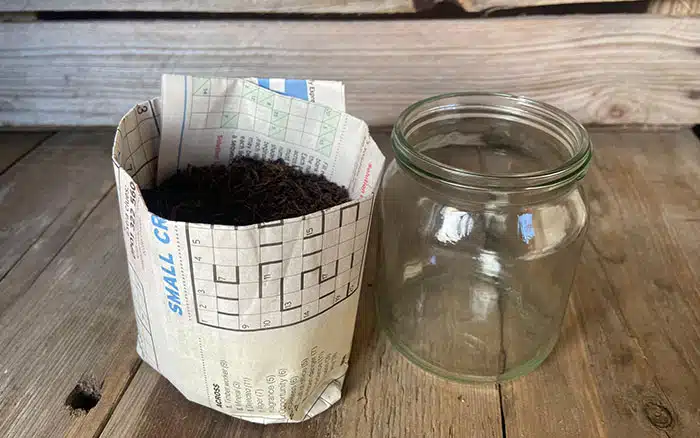
For this kind of shaped seed plant pot, you can use newspaper instead of toilet roll tubes. All you’ll need is one sheet of a standard newspaper per pot and a small glass tumbler from the kitchen to use as the structure to wrap the paper around.
- Place a sheet of newspaper on a flat surface and fold the long side of the newspaper in, about a third of the way. From the other side, fold the other long side inwards so they overlap slightly in the middle.
- Lie the glass down at the edge of the paper, leaving space for the newspaper at the top to be folded over. Then, roll the glass so the newspaper is completely wrapped around the glass.
- The next step is to fold the excess newspaper at the top of the glass. Try to pleat it round, then turn the piece upside down to remove the glass from the newspaper.
- Reach into the newspaper and fold down the flaps of paper at the end of the tube to form the base. You can solidify the base by placing the glass back into the tube so the bottom of the glass presses against the table.
- If the base keeps opening, keep the glass in with the closed side against the bottom of your pot, turn it upside down and press the folding against the bottom of the glass. Have a little play with the pleating until it feels secure.
There you have it, a perfect little plant pot to sow seeds in. It’s slightly less sturdy than the cardboard pots, but much quicker and less messy.
Pop several together in a tray and you have a neat block of seedlings ready to move into your kitchen garden beds when the time is right. This style suits container gardening, especially when you want lots of small plants to fill patio pots and window boxes.
Biscuit Tins or Chocolate Tubs
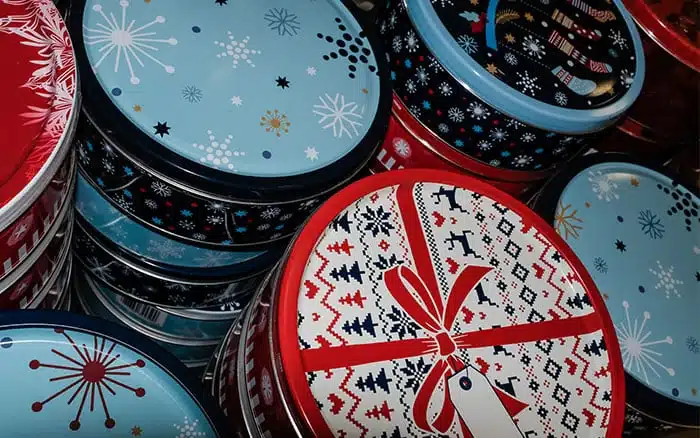
Another top tip is to keep hold of the inserts from biscuit tins or chocolate tubs. Both are sturdy, either made from metal or plastic, so although you can’t plant them into the ground, you can use them year after year. Again, you’ll need to make drainage holes in the bottom and sand off any sharp edges to avoid hurting yourself. Used this way, they become part of your container gardening toolkit, sitting happily beside terracotta pots, troughs, and baskets.
These make excellent tabletop planters. Fill them with compost and sow cut-and-come-again salad leaves, herbs, or even a few radishes for a compact crop. They are handy for renters or anyone who wants a moveable mini garden that can follow the sun. Mixing shop-bought terracotta pots with homemade diy garden containers gives you a flexible, affordable set-up for growing flowers and vegetables in every space.
This is just one of many ways to make the most of resources you have lying around at home. These homemade pots will save you time, money, and are great for the environment. Over time, you’ll find your own favourite materials and shapes to suit different plants and corners of the garden.
Frequently Asked Questions
Can I use homemade pots for all types of plants?
Homemade pots are great for most seedlings, salads, and herbs, but woody shrubs and trees are better started in sturdier containers or nursery pots.
Do I need special compost for garden pots DIY projects?
A good quality peat-free multipurpose compost works well for most garden pots diy ideas. For hungry crops like tomatoes, choose a compost enriched with plant food.
How long do cardboard and newspaper pots last?
They usually last one growing season. Cardboard holds together longer than newspaper, so use it for slower-growing crops and deeper-rooted plants.
Are homemade pots safe to plant straight into my kitchen garden soil?
Yes, as long as the materials are plain cardboard or newspaper without glossy inks or plastic coatings. They will break down naturally in the soil.
What can I grow in biscuit tins and tubs?
Biscuit tins and tubs are perfect for compact crops. Try salad leaves, small herbs, or dwarf varieties of veg that suit container growing.




Leave A Comment