
Discover how growing blueberries in a container provides delicious fruit, autumnal colour and seasonal interest.
There’s something wonderful about growing your own fruit, especially when it can be enjoyed in a delicious homemade dessert.
If you love apple crumble, why not try adding some freshly picked blueberries?
Growing blueberries in a container is a fantastic option for smaller gardens, patios and balconies. These wonderful plants offer much more than just nutritious fruit. Their delicate spring flowers, attractive foliage and gorgeous autumn colours provide interest throughout the growing season.
As October arrives, blueberry leaves develop beautiful shades of red and orange, adding another splash of colour to your garden.
Why grow blueberries in containers?
Blueberries are lovely plants to grow, whether in the ground or in containers.
However, growing blueberries in a container gives you greater control over their growing conditions, particularly the compost. Blueberries prefer acidic soil, so growing them in pots can be especially useful if your garden soil isn’t suitable.
Additionally, you can move your container into a sunny position, helping encourage healthy growth and delicious crops.
With the right care, these productive plants can reward you with increasing harvests each year.

Choose two blueberry plants for better crops
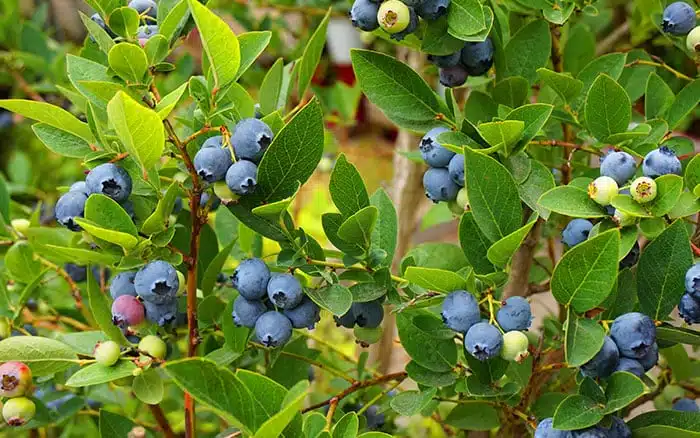
Most blueberries are self-fertile, meaning they can produce fruit without another plant nearby.
However, planting two different varieties can improve pollination and increase the amount of fruit each plant produces.
It isn’t simply a case of having twice as many plants. Cross-pollination can encourage each individual plant to produce a more generous crop. Also, choosing different varieties allows you to enjoy a selection of different blueberry flavours.
It’s important to ensure both varieties flower at approximately the same time. Otherwise, bees won’t be able to transfer pollen between the plants effectively. Therefore, check the flowering times on plant labels or ask your local garden centre for advice.
Growing blueberries in a container
When growing blueberries in a container, carefully removing the plant from its original pot is an important first step. Try to keep as much compost around the roots as possible to avoid disturbing them.
Place your hand across the top of the pot, positioning your fingers between the stems.
Next, gently squeeze the sides to loosen the compost before turning the pot upside down.
Carefully position the plant inside a larger container with suitable drainage holes. The container should be at least 30cm for a younger plant, and between 45- 50 cm for a larger plant.
Importantly, leave a small gap between the compost surface and the container’s rim, without burying the plant deeper. This creates a useful watering space, allowing water to soak through the compost instead of overflowing.

Choose the right compost

Choosing the correct compost is essential for successful blueberry container growing.
Blueberries need ericaceous compost, which is specially formulated for plants that prefer acidic growing conditions.
Without the correct acidity, blueberries can struggle to absorb nutrients and produce healthy green foliage.
Consequently, their leaves may become mottled yellow, and the plants can start looking unhealthy.
Using peat-free ericaceous compost gives your blueberries a suitable environment for healthy growth.
After all, choosing the right compost for the right plant makes an enormous difference.
Watering and feeding blueberries
Once planted, move your blueberry container into a sunny position to encourage strong growth and fruit production.
Blueberries need consistent moisture throughout the growing season, particularly when grown in containers.
Additionally, the watering space you’ve created makes it easier to thoroughly hydrate the compost.
Rainwater is ideal as it helps maintain the acidic conditions these plants prefer.
There’s no need to feed your blueberry immediately after planting.
Instead, apply a specialist blueberry fertiliser or feed designed for acid-loving plants every couple of weeks during spring and summer.
Follow the manufacturer’s instructions to encourage healthy plants and productive harvests.
Enjoy your homegrown blueberries
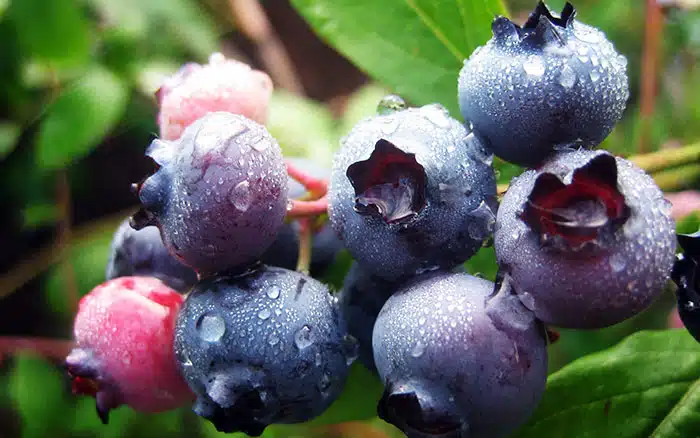
Growing blueberries in a container can produce a small harvest during the first growing season, depending on conditions. Even a cupful of fresh blueberries makes a wonderful addition to a homemade apple crumble. Furthermore, as your plants establish and receive regular feeding, you can enjoy increasingly generous harvests each year.
With their beautiful flowers, nutritious fruit and stunning autumn foliage, blueberries are plants that keep on giving.
For more great gardening advice, make sure you head to my YouTube Channel. Make sure you’re subscribed with notifications on so you don’t miss any of my new videos.
Plus, for more seasonal gardening advice, plant inspiration and practical growing tips, sign up to my newsletter.
Frequently Asked Questions
1 – Can blueberries grow successfully in containers?
Yes, blueberries grow well in containers, making them ideal for smaller gardens, patios and balconies. RHS recommends a container at least 30cm for young plants, and 45-50cm for a larger plant.
2 – Do you need two blueberry plants to produce fruit?
Most blueberries are self-fertile, but two different varieties flowering together can improve pollination and increase fruit production.
3 – What compost is best for blueberries?
Peat-free ericaceous compost is ideal because blueberries require acidic growing conditions to remain healthy.
4 – Where should you position a blueberry container?
Place your blueberry container somewhere sunny to encourage healthy growth and productive harvests.
5 – When should you feed blueberries in containers?
Feed blueberries during spring and summer using specialist blueberry fertiliser or a feed formulated for acid-loving plants.




Leave A Comment