
Grow simple crops with children for fresh, home-grown additions to a healthy school lunch box.
There’s something wonderfully wholesome about growing food with children. It doesn’t have to involve a huge vegetable plot, complicated growing techniques or hours spent digging.
In fact, some of the best crops for getting children interested in gardening are simple ones. They can sow them, watch them grow and pick them for their own school lunch.
As the new school year approaches, why not make a little space for a ‘lunch box garden’?
It’s a fun way to get children involved with growing their own food. It also gives them something healthy and tasty to look forward to when those first crops are ready to harvest.
Easy crops for little growers
The trick to keeping children interested is choosing crops that are relatively quick, reliable and, ideally, tasty straight from the garden.
Carrots
There’s something magical about pulling up a carrot and discovering what has been growing underground. The sweet taste of freshly harvested, young carrots is also sure to delight most children!
Small or baby carrot varieties are particularly suitable for growing with children. They can be harvested when they are young and sweet.
There are also small, round varieties such as ‘Paris Market’ and ‘Rondo’, which grow into small, golf-ball-sized roots.
They are quick to mature and are also good choices if the soil isn’t particularly good. Furthermore, they are suitable for pots and containers, as they don’t grow deeply into the soil or compost.
High-yielding varieties, such as ‘Autumn King’, are ideal to sow now whilst the soil is still warm. They have the added advantage of being left in the ground over winter and pulled as and when needed.
Don’t worry if the seeds are sown very close together. Some can be harvested whilst still young, freeing up space for the remaining carrots to grow larger.
Let the children choose where to sow them and make a game of checking for the first feathery carrot leaves.

Radishes
Radishes are brilliant for impatient young gardeners because their leaves and roots grow so quickly. As a result, children don’t have to wait too long to see the results of their planting.

The seeds are large enough to make it easy for children to sow them. They can then watch the little seedlings emerge before pulling up the finished radishes, which is often half the fun!
Choose colourful varieties if you can, including red, pink, white or unusual-shaped radishes such as ‘Rainbow Mix’.
They can be sliced and added to sandwiches or popped into a school lunch box for a crunchy snack.
Lettuce and salad leaves
Lettuce plants don’t like growing conditions that are too hot. In fact, if it’s too hot when sowing, the seeds often won’t germinate. This is known as ‘heat-induced dormancy’. Similarly, if conditions are too hot while they’re growing, it can trigger the plants to bolt and become bitter. Therefore, this time of year should be good for sowing more lettuce seeds, including varieties such as ‘All Year Round’.
Ideally, succession sow by sowing a few seeds now and a few more around ten days later. Lettuce plants tend to mature at around the same time. That’s another reason not to sow too many seeds in one go!
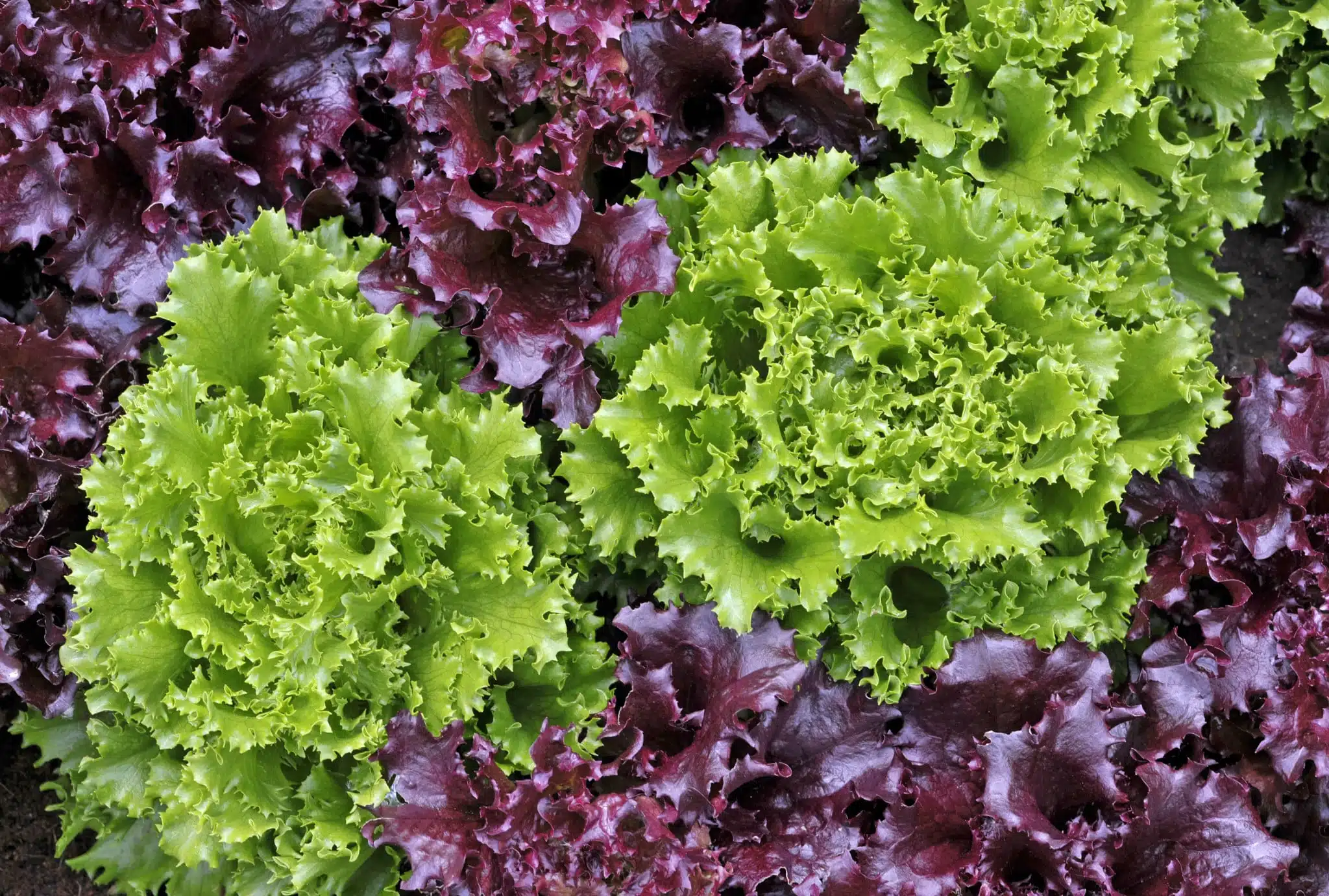
In addition to growing a whole head of lettuce, you can sow quick-growing salad leaves in different shades of green and purple.
‘Cut and come again’ varieties such as ‘Salad Bowl’ and ‘Winter Mix’ are good choices for this time of year. Salad leaves such as mizuna and mibuna can also be grown.
Children will be able to pick leaves regularly as the plants mature and watch new leaves replace those they have picked.
Different colours and textures make this more interesting than a standard bag of salad. You can also encourage children to create their own mini salad mixes for sandwiches or wraps.
Give every child their own growing space
One of the easiest ways to make gardening feel like their project is to give each child their own little patch.
This is where a raised bed can be particularly useful.
A larger raised bed could be divided into sections, with each child responsible for their own area. They might choose which crops to grow, sow their own seeds and keep an eye on how everything develops.

Because raised beds bring the growing area up from ground level, they can also be easier for younger children to reach.
There’s less need to kneel down or lean across the soil. The boundaries also make it clear which area belongs to whom. You could even give each section a little painted plant label with the child’s name on it.
Suddenly, watering the carrots or checking the radishes becomes their job. It no longer feels like another gardening task being done by Mum or Dad.
You could also let each child design their own ‘dream lunch box’. Then, work out which ingredients they could grow themselves for their homemade school lunch.
Give children jobs they can really own
Children don’t necessarily need to be involved in every stage of gardening. Sometimes it works better to give them small jobs that genuinely belong to them. A simple gardening diary can make this even more fun.
Children could draw their plants, record when the first seedling appeared or take photographs as the plants grow.
Older children might enjoy keeping track of how many vegetables they harvest.
Don’t worry if the rows aren’t perfectly straight or a few seedlings get accidentally pulled up. That’s all part of learning!
Turn it into a little experiment
Growing lunch box crops is also a great opportunity for children to experiment.
For example, try growing the same crop in two different parts of the garden and see which grows best.
Let children choose between two varieties of radish. Alternatively, plant a few seeds every couple of weeks and see whether they can keep the harvest going for longer.
You can also encourage them to taste crops at different stages. What does a tiny carrot taste like compared with a fully grown one? Are young salad leaves sweeter?
The garden becomes a place to investigate rather than simply somewhere to do chores.
Keep it simple
Most importantly, don’t feel that you need to create a perfect children’s vegetable garden.
A few pots on a patio, a small raised bed or a handful of containers can be enough to get started.
Choose a few crops that are easy to grow, give children some ownership of the space and let them enjoy the messy bits.

Sowing seeds, watering, watching, picking and tasting are all valuable parts of the experience.
And when the first home-grown carrot makes its way into the school lunch box, it may taste just a little better because they grew it themselves.
For more great gardening advice, make sure you head to my YouTube Channel. Make sure you’re subscribed with notifications on so you don’t miss any of my new videos.
Plus, for more seasonal gardening advice, plant inspiration and practical growing tips, sign up to my newsletter.
Frequently Asked Questions
1 – What crops are easy for children to grow for a school lunch?
Carrots, radishes, lettuce and salad leaves are good choices because they are relatively simple to grow and can be added to lunch boxes.
2 – What carrots are suitable for children to grow?
Small or baby carrots are particularly suitable. Round varieties such as ‘Paris Market’ and ‘Rondo’ can also be grown in pots and containers.
3 – Why are radishes good for young gardeners?
Radishes grow quickly, so children do not have to wait long to see results. Their seeds are also large enough to sow easily.
4 – Can children grow salad leaves for their lunch boxes?
Yes. Cut-and-come-again salad leaves can be picked regularly as they mature, with new leaves growing to replace those harvested.
5 – Do you need a vegetable garden to grow school lunch crops?
No. A few pots, containers or a small raised bed can provide enough space to get children started with growing food.




Leave A Comment