
Create a calm minimalist garden with structure, repetition, purposeful planting, wildlife value and year-round interest.
There’s something wonderfully calming and restful about a modern minimalist garden.
Clean lines, simple shapes, breathing space and a carefully chosen planting scheme can make the whole design look effortlessly stylish.
Some people might think minimalist means a dull, boring garden, but that’s far from the truth! Instead, choose plants that complement or contrast with the hard landscaping and house style. They should have a strong, structural presence, with every choice earning its place in the design.
Don’t be tempted to fill every border and inch of space with a bit of everything. Instead, think carefully about what function each plant should perform: structure, movement, colour and/or winter interest.
Think plants with a purpose.
Keep minimalist planting simple
Resist the temptation to use too many different plants.
Instead, choose a smaller selection and repeat them throughout the garden. Repeating plants creates rhythm and makes a garden feel considered rather than cluttered.
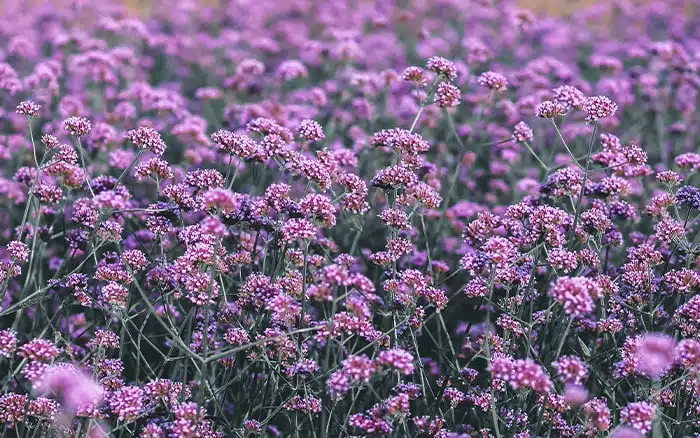
Airy plants with a see-through structure include Verbena bonariensis or the less common Verbena brasiliensis. Combine them with similar-coloured, long-flowering, low-growing plants such as Nepeta ‘Walker’s Low’ or Geranium ‘Rozanne’.
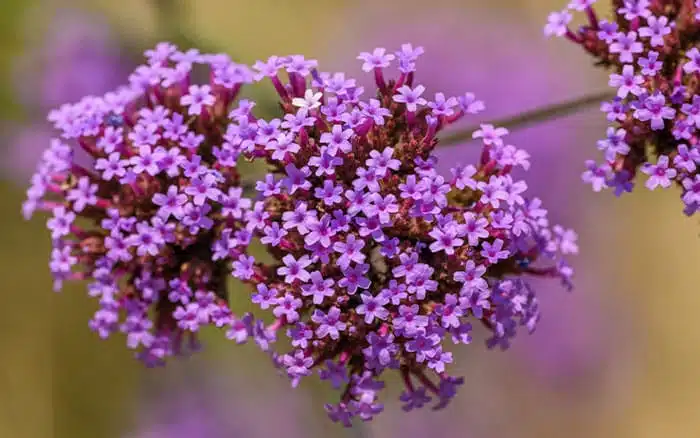


Additionally, all these plants have purple or blue flowers, which recede within your field of vision. This can make small spaces feel larger rather than closed in and crowded.
Ornamental grasses can serve a similar purpose and look particularly effective with tightly clipped evergreens and architectural perennials. They also combine well with plants that have strong, distinctive foliage.
A row of identical grasses along a path will be infinitely more effective than ten distinctly different plant types. Otherwise, all those different plants can compete for your attention.
Go for structure
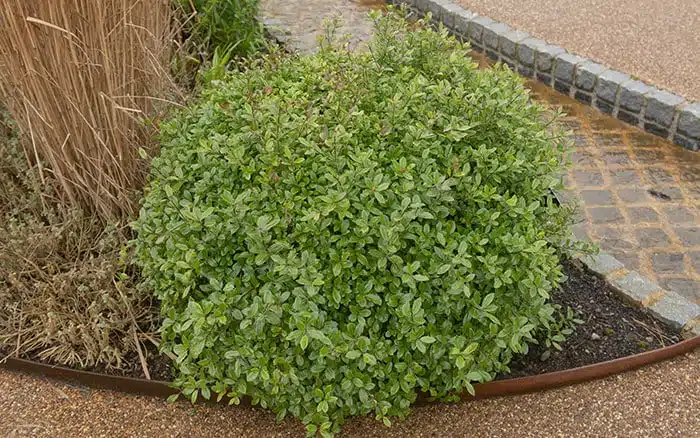

Modern gardens often look their best when something provides structure all year round. Evergreen plants are ideal candidates for this purpose.
Look for evergreen plants that naturally grow in a mounded shape. For example, Pittosporum ‘Golf Ball’ works well in part shade as well as full sun. Silver-leaved Hebe sutherlandii suits a bright, sunny aspect.
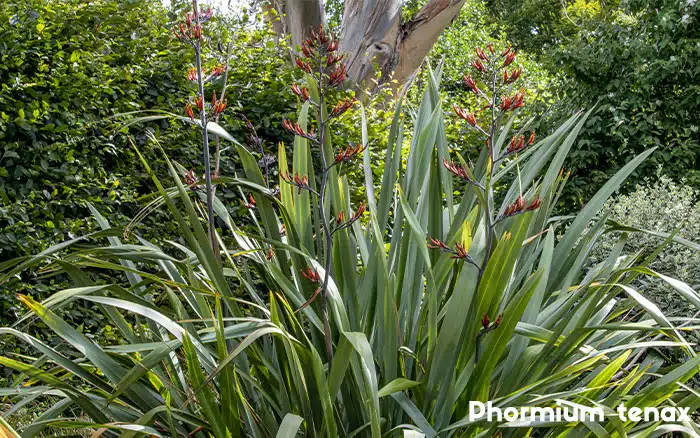
Phormiums make bold, architectural statements, but choose cultivars carefully because some can quickly become unmanageable monsters. As a general rule, P. tenax and its cultivars tend to have more upright leaves. Meanwhile, P. cookianum and its cultivars tend to have more arching leaves.
If you’re happy to clip plants, yew (Taxus baccata) is an excellent choice. However, the soil must not be compacted and should drain well.
It can be clipped into strong, structural shapes, including rounded, cubed or topiarised forms. Additionally, its dark evergreen leaves provide a great backdrop and contrast to white flowers and silver-leaved plants.
And don’t forget trees. A carefully positioned multi-stemmed birch can become a real focal point. Its pale bark and delicate canopy provide interest without making the space feel crowded.
The classic choice is Betula utilis var. jacquemontii. However, other species include B. ermanii, with delightful creamy, peach-coloured bark.




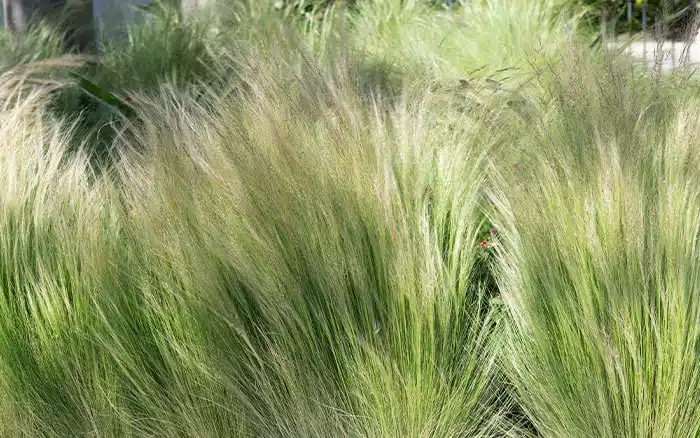

If one plant group seems made for modern gardens, it has to be ornamental grasses.
They bring movement, texture and a lovely soft contrast against hard landscaping such as paving, brick and concrete.
Low-growing Stipa tenuissima is another classic choice because it is light and airy. However, it needs cutting back hard in late February. The old stems should also be removed to avoid the scheme looking ‘messy’.
S. ichu is currently a very popular choice. It is taller than S. tenuissima and has an upright habit. This makes it a great choice for ‘dot’ planting around the garden.
Other upright grasses that work well include Panicum virgatum and Calamagrostis ‘Karl Foerster’. Both provide a strong vertical presence.
For a really contemporary look, plant grasses in generous groups rather than dotted around individually. They look particularly good alongside gravel, large paving slabs or crisp-edged borders.
Additionally, many grasses look fantastic well into autumn and winter, when their seedheads catch the low sunlight.
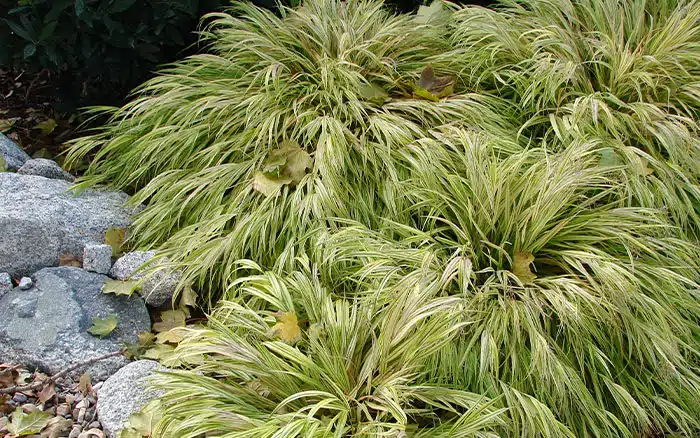
Hakonechloa macra is often used in modern schemes, especially at border edges or around the base of trees. It has the added benefit of its leaves changing colour during autumn and winter. Eventually, they turn a beautiful burnished bronze.


Think about foliage, not just flowers


Large, bold leaves make dramatic statements. For shade, large-leaved hosta varieties work well, provided slugs and snails aren’t a problem.
Fatsia japonica provides glossy, architectural foliage.
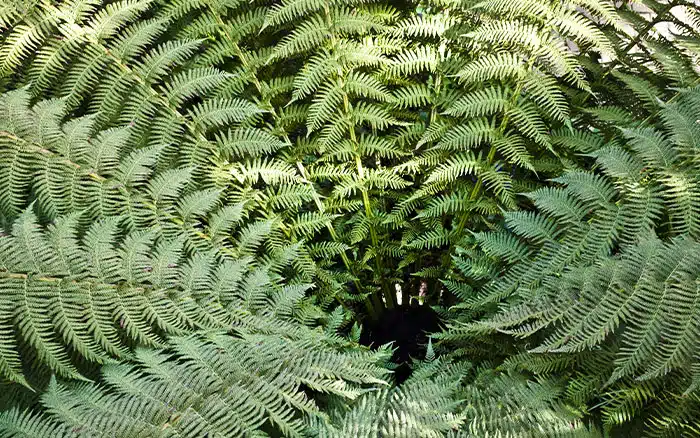
Tree ferns make fantastic structural statements if you’re looking for a more fun and architectural feel. However, consider your location before choosing them.
Unless your garden is very sheltered and in a warmer area, they are likely to need winter protection. You may need to remove the leaf stems and protect the crowns over winter.
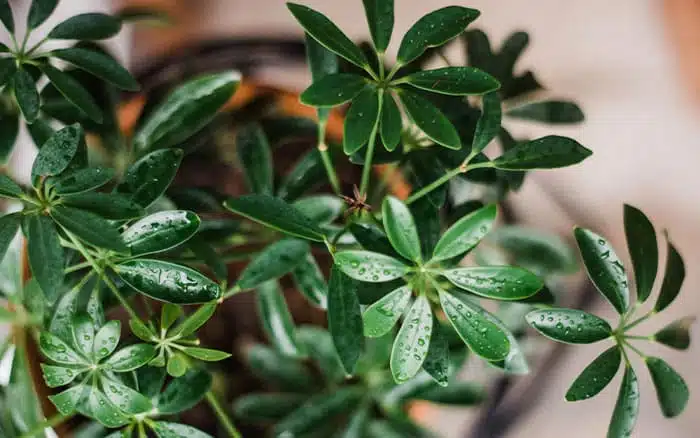
Schefflera are also great choices for a more enchanting feel.
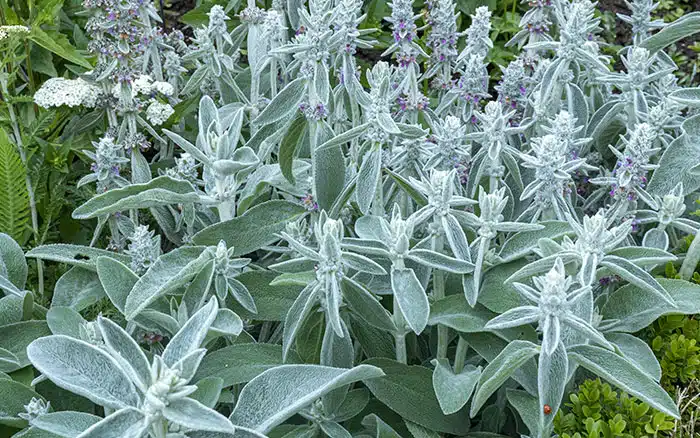
Silver foliage can look fantastic against dark paving or painted walls. For example, Stachys byzantina, Santolina and Lavandula all bring a lovely silvery-grey palette. They also add texture and, in the case of lavender, fragrance.
For shade, the beautiful Astelia chathamica is a wonderful choice. Its evergreen leaves combine arching and upright growth with silver streaks.


Add a splash of colour
A minimalist garden doesn’t mean you have to stick to green and white. A carefully chosen colour can be incredibly effective.
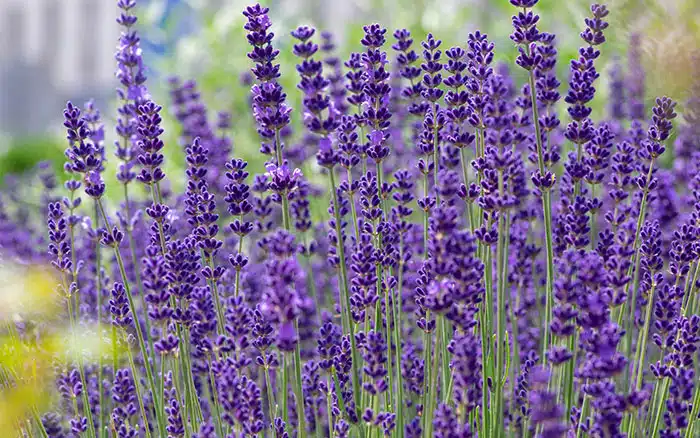
For example, a scheme based mainly around green foliage and grasses could be lifted with pops of purple. Salvia nemorosa ‘Caradonna’ or lavender can provide these pops of colour.
For a cooler, sophisticated palette, try white flowers such as Echinacea ‘White Swan’. Alternatively, for shade, choose Anemone × hybrida ‘Honorine Jobert’.
The trick is repetition. Rather than having every colour of the rainbow, choose one or two accent colours. Then, use them in several places around the garden.
Also, mass these perennials together to maximise their impact.



Don’t forget scent
When keeping visual planting relatively simple, scent becomes even more important in a minimalist garden.
Lavender is an obvious choice for a sunny, contemporary garden. Meanwhile, nepeta gives a similar relaxed feel with masses of soft blue flowers.
For evening enjoyment, consider plants such as philadelphus or daphne. Position scented plants near seating areas or pathways where you can actually enjoy them.
After all, a minimalist garden should be lovely to experience, not just lovely to look at.
Make room for wildlife
Modern and wildlife-friendly can absolutely go hand in hand.
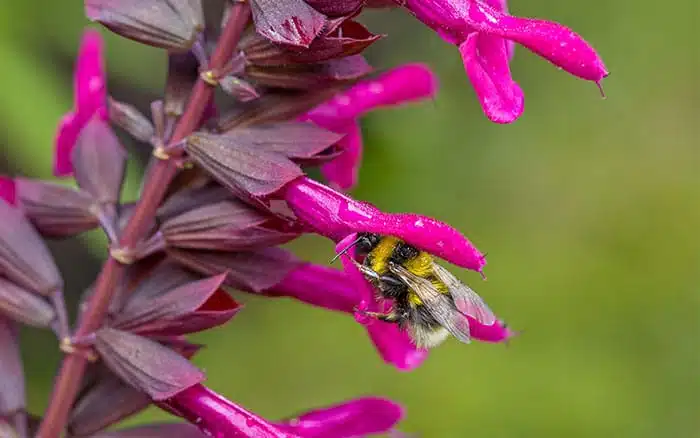
Choose flowering plants that provide nectar for bees and other pollinators, including salvias, lavender, verbena and echinacea.
Also, leave some ornamental grasses standing over winter rather than cutting everything down in autumn. Their seedheads can provide food and shelter.
Even a very neat garden can have a little wild corner. For example, plant long-flowering, drought-tolerant Gaura ‘Whirling Butterflies’ alongside a crisp paved terrace. This relaxed planting can make the whole design feel more interesting and relaxed.


Use plants to soften hard landscaping
Modern gardens often contain considerable hard landscaping, including paving, walls, fencing, gravel and raised beds. The right plants can be brilliant for softening all those hard edges.
Let grasses spill gently over a raised bed, plant a climber against a wall or use thyme between paving stones.
Erigeron karvinskianus is a wonderful, long-flowering, semi-evergreen plant for tumbling over walls, steps and paving edges. It can be covered in clouds of small daisy flowers for months on end.
However, it does like to self-seed around the garden, but unwanted seedlings are easily removed.
Think vertically
If space is limited, look upwards.
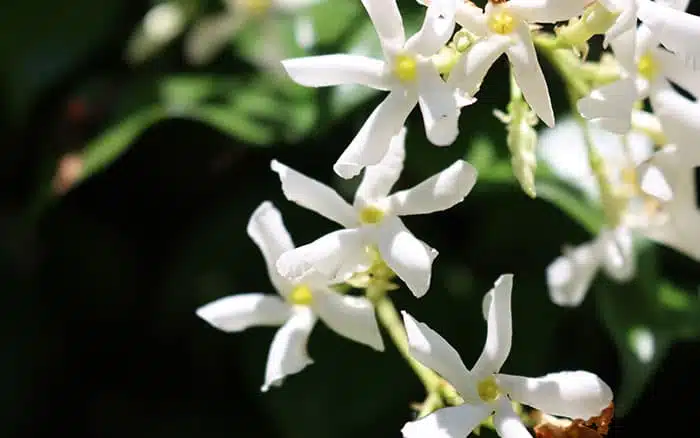
Climbers are perfect for adding greenery without taking up much ground space. Trachelospermum jasminoides is a well-behaved, evergreen choice for a sunny, sheltered wall. Additionally, it has delightfully scented white flowers in summer.
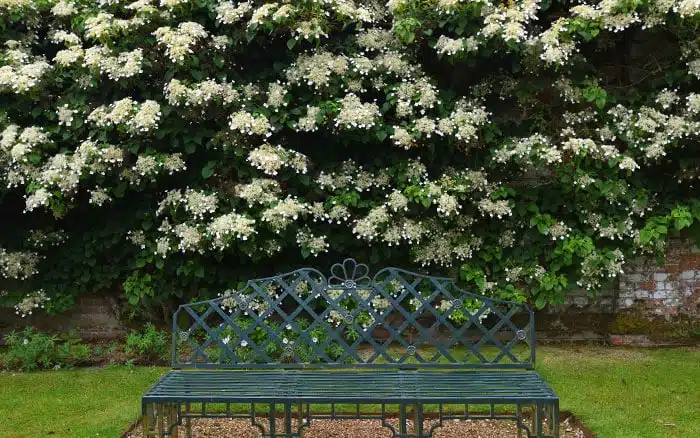
For something more traditional, climbing hydrangeas can be wonderful in a shady position.
Steel screens can now be bought with troughs fitted to their bases. These can be planted with evergreen ivy trained to the top of the screens. They provide easy-to-maintain, instant impact and privacy if needed.
Green walls look amazing in a contemporary scheme. However, they need a properly maintained drip-feed and watering system installed by a professional company. This is necessary to keep them looking good for any length of time.
The finishing touch
Perhaps the biggest trick with a minimalist garden is knowing when to stop.
Choose plants because you love their shape, foliage, flowers, scent or wildlife value. Finally, give them enough room to shine and repeat them within one area and/or around the garden.
For more great gardening advice, make sure you head to my YouTube Channel. Make sure you’re subscribed with notifications on so you don’t miss any of my new videos.
Plus, for more seasonal gardening advice, plant inspiration and practical growing tips, sign up to my newsletter.
Frequently Asked Questions
1 – How can you keep planting simple in a modern garden?
Choose a smaller selection of plants and repeat them throughout the garden to create rhythm without making it feel cluttered.
2 – Which plants can provide year-round structure?
Evergreen plants are ideal, including Pittosporum ‘Golf Ball’, Hebe sutherlandii and yew (Taxus baccata).
3 – Why are ornamental grasses good for modern gardens?
They provide movement, texture and soft contrast against hard landscaping. Many also retain attractive seedheads into autumn and winter.
4 – Can a modern garden still support wildlife?
Yes. Nectar-rich flowers support pollinators, while ornamental grass seedheads can provide food and shelter over winter.
5 – How can plants soften hard landscaping?
Use grasses over raised-bed edges, climbers against walls, low-growing thyme between paving, or Erigeron karvinskianus around steps and edges.



Leave A Comment