
Choose plants for screening in pots to add privacy, structure and greenery to outdoor spaces.
Whether you’re looking to create a little privacy from neighbours, plants grown in containers can be a simple and stylish solution. They can also soften an overlooked patio or divide your outdoor space into cosy “garden rooms”.
The beauty of container planting is that it gives you flexibility. You can move pots around as your garden changes. You can add instant height to a patio and even garden successfully if you don’t have borders. Best of all, there’s a container plant to suit almost every situation, including plants for screening in pots.
Best plants for sunny spots
If your patio or seating area enjoys sunshine for most of the day, these plants thrive in the warmth. They also provide excellent screening.
Bamboo, clump-forming varieties


Bamboo is one of the quickest ways to create a living screen. It provides movement, gentle rustling sounds and year-round evergreen foliage.
Choose clump-forming varieties such as Fargesia robusta, Fargesia rufa or Fargesia ‘Campbell’. These are well-behaved and won’t spread aggressively like running bamboos such as Phyllostachys.
Ideal for:
- Screening overlooking windows
- Creating a modern garden feel
- Softening fences and walls
Photinia ‘Red Robin’

With glossy evergreen leaves and striking, bright red new leaf growth in spring, this is an excellent screening shrub. It is easy to grow and responds well to pruning.
Ideal for:
- Privacy
- Evergreen colour
- Formal or informal gardens
Plants for part shade
There are plenty of beautiful plant options for shadier spots.
Prunus lusitanica (Portuguese laurel)
Portuguese laurel is a smart, evergreen, large shrub or small tree, with dark green leaves and red stems. It is suitable for growing in large containers and clips neatly if a more stylised look is required.
Ideal for:
- Screening boundaries
- Providing a stylish evergreen structure
Fatsia japonica
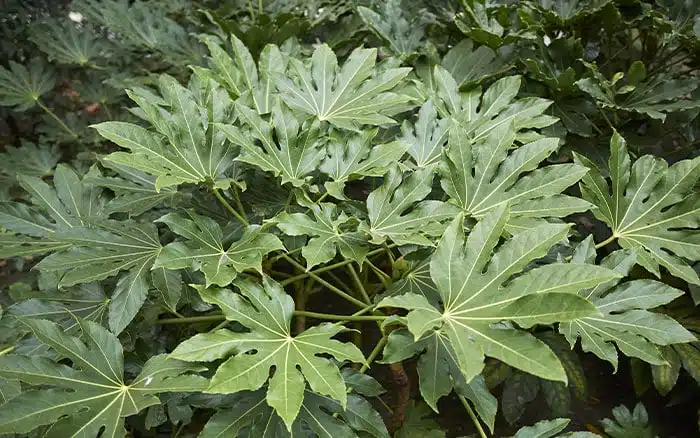
Large architectural leaves on this evergreen shrub create an instant tropical feel, even in smaller gardens. Additional benefits are that large leaves make a smaller space feel larger. The shine on the leaves also lights up a dark space.
Ideal for:
- Sheltered patios
- Urban gardens
- Contemporary planting

Camellias
If you’d like flowers as well as screening, camellias are hard to beat. Their glossy evergreen foliage looks attractive year-round. Depending on the chosen cultivar, you can have flowers from early autumn and through April.
Look out for C. sasanqua cultivars if you want flowers in the autumn. Flower types range from single and double to frilly petals. They are generally pink or white, and sometimes striped. They grow well in full sun, as long as the situation is sheltered. The compost should be slightly acidic or neutral and kept reliably moist.
Ideal for:
- Morning sun or dappled shade
- Colour during cooler months
For later flowering camellias, look out for C. japonica and its many cultivars.
Creating privacy from neighbours
Sometimes all that’s needed is to block an unattractive view.
Rather than planting a full hedge, consider placing two or three large containers together. Use plants of different heights and textures.
Good combinations include:
- Bamboo with ornamental grasses
- Portuguese laurel with trailing ivy
- Photinia with Hakonechloa grasses
Using containers of varying heights creates a much more natural appearance than one continuous row.
Dividing up a small garden


Containers aren’t just for privacy. They’re brilliant for defining different areas in the garden.
Tall planters placed either side of a pathway can create an entrance into another part of the garden. Positioning groups of pots can also separate dining and relaxing spaces.
Plants that work particularly well include:
- Bamboo
- Italian cypress, Cupressus sempervirens
- Bay trees, Laurus nobilis
- Pittosporum tenuifolium
These all provide vertical interest without taking up too much floor space. This makes them useful plants for screening in pots.
Choosing the right container
Large pots:
- Hold more moisture
- Reduce the need for constant watering
- Enable the plant to make stronger root growth
- Help prevent tall plants from blowing over in windy weather
Choose frost-proof containers with plenty of drainage holes and use a good-quality peat-free compost.
Adding a layer of crocks or gravel isn’t essential. However, raising pots slightly on pot feet helps excess water to drain away.
Choosing the right compost
The compost you use is just as important as the container itself. For larger shrubs, small trees and screening plants staying in the same pot for several years, choose a loam-based compost. John Innes No. 3 is the best choice. Its heavier texture provides better stability for taller plants. It also holds moisture well and contains nutrients that support steady, long-term growth.
For smaller containers or seasonal planting, a good-quality peat-free multi-purpose compost works perfectly well. However, it tends to dry out more quickly. You can improve both types of compost by mixing in some horticultural grit to aid drainage if needed. You can also add a controlled-release fertiliser to give plants a good start.
Whichever compost you choose, topping it up or replacing some every couple of years will help keep container plants healthy. It will also help them continue thriving.
Looking after container-grown screening plants
Plants growing in pots rely entirely on you for food and water.
Water regularly
Containers dry out much faster than garden soil, especially during warm weather. Check moisture regularly and water thoroughly rather than little and often.
Feed throughout the growing season
From spring until late summer, use a balanced liquid feed every couple of weeks. Alternatively, apply a slow-release fertiliser in spring. Well-fed plants produce healthier foliage and stronger growth, giving better screening.
Repot when needed
Every few years, roots will begin to fill the container. Either move the plant into a slightly larger pot or refresh the compost. Remove some of the old mix and replace it with fresh compost.
Watch out for vine weevils
One pest that particularly likes container-grown plants is vine weevil. The adult beetles leave distinctive U-shaped notches around leaf edges. However, it is their creamy white grubs underground that do the real damage. They feed on plant roots.

Signs include:
- Wilting despite regular watering
- Poor growth
- Plants collapsing unexpectedly
To reduce the risk:
- Check new plants before bringing them home
- Avoid letting old compost build up year after year
- Refresh compost regularly
- Inspect pots during repotting for grubs
- Encourage birds into the garden, as they’ll happily feed on adult beetles
If vine weevils become a recurring problem, biological controls containing beneficial nematodes can be watered into compost. Use them during the warmer months to target the grubs naturally.
Catching infestations early usually gives plants the best chance of recovery.
A little care goes a long way
Container-grown screening plants ask for a little more attention than those growing in the ground. However, the rewards are well worth it. With regular watering, seasonal feeding and the occasional check for pests, they’ll provide beautiful greenery, welcome privacy and structure for many years.
Whether you’re hiding an unsightly fence, a thoughtfully chosen collection of container plants can transform your outdoor space. They can also create a peaceful seating area or make a small garden feel more intimate. One pot at a time, they can make a real difference.
For more great gardening advice, make sure you head to my YouTube Channel. Make sure you’re subscribed with notifications on so you don’t miss any of my new videos.
Plus, for more seasonal gardening advice, plant inspiration and practical growing tips, sign up to my newsletter.
Frequently Asked Questions
1 – What are the best plants for screening in pots?
The best plants for screening in pots include bamboo, Portuguese laurel, Photinia ‘Red Robin’, bay trees, olive trees and Pittosporum. Choose plants to suit your light levels, container size and the style of your garden.
2 – Can bamboo be grown in pots for screening?
Yes, bamboo can be grown in pots and is useful for quick screening. Choose clump-forming varieties, such as Fargesia. These are better behaved than running bamboos.
3 – What compost should I use for container screening plants?
For larger shrubs, small trees and long-term container plants, use a loam-based compost such as John Innes No. 3. It offers better stability, holds moisture well and supports steady growth.
4 – How do I stop tall container plants blowing over?
Use large, heavy, frost-proof pots with good drainage. A loam-based compost can also add stability. Position containers in a sheltered spot if your garden is exposed.
5 – How often should I water screening plants in containers?
Container-grown screening plants dry out faster than plants in the ground. Check moisture regularly, especially in warm weather. Water thoroughly when the compost feels dry.



Leave A Comment