
Add some structure and colour to your January garden with striking winter bark and stems.
When winter strips the garden of flowers and foliage, many borders can look bare. However, plenty of shrubs and trees can set the garden alight colour-wise. Others provide year-round interest through decorative winter bark and stems.
With thoughtful planning, winter can become one of the most visually rewarding times of the year. For example, fiery stems glow against a grey sky. Meanwhile, pale trunks become luminous in weak winter sunlight. Finally, peeling coloured bark adds drama and texture when flowers are absent.
For maximum impact, plant the following suggested plants in groups.
Winter’s Fireworks
There is no better group of shrubs for vivid winter colour than dogwoods. Notably, they are easy-care deciduous shrubs, mainly from North America. They come into their own once leaves fall in late autumn. Then, brightly coloured stems are revealed and persist into early spring. By then, new leaves begin to emerge.
One of the finest dogwoods for winter stems is Cornus sanguinea ‘Anny’s Winter Orange’. It is vigorous and upright, with beautiful orange-red stems. It reaches about 200cm high and 200cm wide. Moreover, it suits chalk, clay, loam, or sand. It grows in acid, alkaline, or neutral soil. Importantly, it will cope even with poorly drained ground.
Other coloured-stem dogwoods to look out for include Cornus sanguinea ‘Midwinter Fire’, with blended yellow, orange and red stems. Its stems are slightly thinner than many other cultivars. Also, try Cornus alba ‘Kesselringii’ for dark purple stems. For golden winter stems, choose Cornus sericea ‘Flaviramea’, which has vibrant golden-yellow growth.
Top Tip – Cut all stems back hard in mid-February, as fresh new growth colours best. Otherwise, leaving stems unpruned will substantially weaken the colour hit.


Unexpected Winter Drama
Blackberries and raspberries are Rubus, but there are ornamental rubus too. These cultivated brambles offer impactful winter stems, with colour that deepens in colder weather. For example, try Rubus thibetanus, the ghost bramble. Or, choose R. thibetanus ‘Silver Fern’ for powdery-white, gracefully arching stems. Then, plant it against a dark background, such as a yew hedge.
Top Tip – Best of all, plant in full sun to maximise stem colour.

Elegance in Shades of White
The ghostly white winter bark of silver birch trees is hard to beat for atmosphere on cold days. Meanwhile, the thin, airy-looking branches create a cosy, rather than oppressive, feel. As a result, they bring light to the garden’s darkest corners.
The beauty of birch is that its winter bark tends to become more striking with age. In addition, there are many variations in shade, tone, and colour. They look wonderful in woodland schemes or informal gardens. Even in smaller gardens, they make a brilliant focal point.
Look for varieties such as Betula utilis var. jacquemontii for bright white winter bark. Alternatively, try Betula ‘Fascination’ for a light rose-pink trunk. For dramatic texture, choose Betula ermanii ‘Mt Zao Purple’. Its striped, peeling bark shows a purple base, overlain with creamy orange tones.
Top Tip – For extra brightness, wash ‘Jacquemontii’ trunks with a diluted solution of washing-up liquid. This can enhance the winter bark colour.


Other Trees for Texture and Polished Perfection
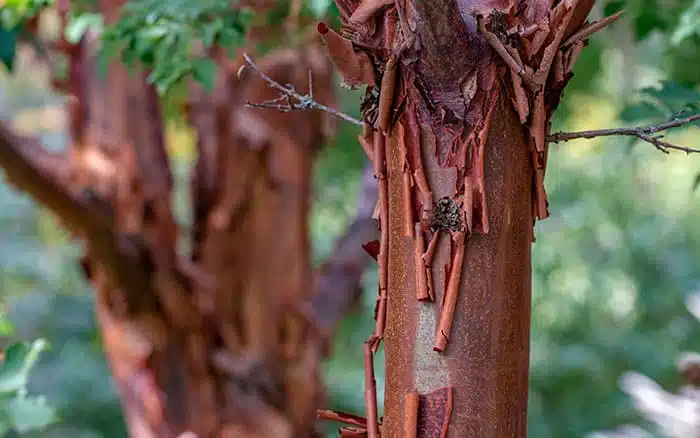
Consider the slow-growing paperbark maple, Acer griseum, for smaller gardens. Its glorious cinnamon-coloured peeling bark provides year-round interest. In winter, it looks especially gorgeous when backlit by low sunlight.
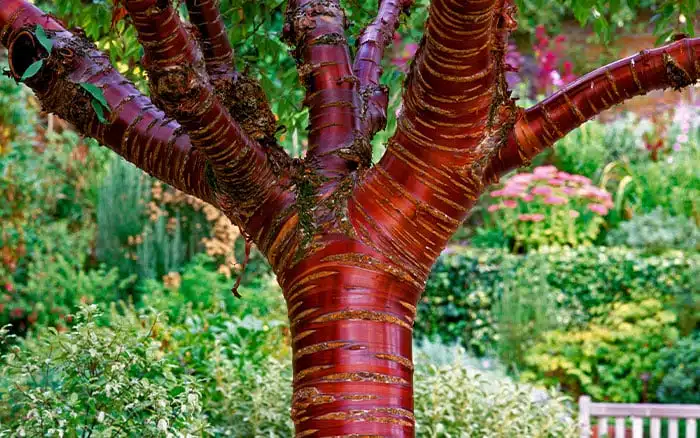
Alternatively, for a tree that truly shines, choose the Tibetan cherry, Prunus serrula. It has smooth, shiny mahogany-coloured bark that you’ll want to touch again and again. Therefore, plant it near the edge of a pathway for close-up winter interest.
For more great gardening advice, make sure you head to my YouTube Channel. Make sure you’re subscribed with notifications on so you don’t miss any of my new videos
Frequently Asked Questions
1 – What are the best plants for winter bark and stems in January?
This January, focus on shrubs and trees that shine without flowers, such as dogwoods, ornamental rubus, birch, paperbark maple, and Tibetan cherry. These plants add colour, texture, and structure when borders look bare.
2 – Which dogwoods give the best winter stem colour?
Dogwoods are standout shrubs for vivid winter stems once leaves fall in late autumn. Top choices include Cornus sanguinea ‘Anny’s Winter Orange’, ‘Midwinter Fire’, Cornus alba ‘Kesselringii’, and Cornus sericea ‘Flaviramea’.
3 – How do you keep dogwood stems bright and colourful each year?
Cut all dogwood stems back hard in mid-February to encourage fresh new growth, which colours best. If you leave stems unpruned, the winter colour display will be substantially weaker.
4 – How do ornamental rubus create unexpected winter drama?
Ornamental rubus offer impactful winter stems that deepen in colour during colder weather. Rubus thibetanus, and R. thibetanus ‘Silver Fern’, look especially striking planted against a dark background, such as a yew hedge.
5 – Which trees have the most striking winter bark for light and texture?
Silver birch brings bright, atmospheric winter bark and airy branches that lift darker corners. For standout options, choose Betula utilis var. jacquemontii, Betula ‘Fascination’, or Betula ermanii ‘Mt Zao Purple’, plus Acer griseum and Prunus serrula for peeling or glossy bark.




Leave A Comment