
Simple tips for training climbers to create height, colour, privacy and structure in your garden.
Climbers are a great way of solving various garden dilemmas, especially when training climbers for awkward spaces. They can hide an ugly wall or fence, or make the most of upward space in a smaller garden. They’re also great choices for adding privacy without the heaviness and cost of a solid structure. They have the added advantage of softening a space, while potentially adding colour and scent too.
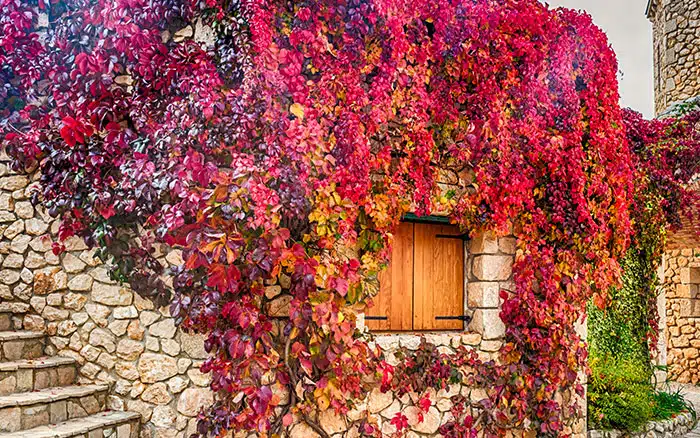
Climbing plants can create seasonal highlights in a garden, such as the stunning red leaves of Virginia creeper. They can also create year-round atmosphere, from framing doorways with climbing hydrangea to clematis over arches and obelisks. Roses trained against a house wall can add colour, structure and romance in very little ground space. So, climbers are chosen not just for how they look, but for what they do. They add softness and a sense of abundance, all without taking up much-needed ground space. They give height without bulk, colour without sacrificing ground space, and, in some cases, delightful scent at nose level!
To get the best from training climbers, it is important to keep each plant within bounds. This means it remains a beautiful feature and asset, rather than a rampant mass of unruly stems. Fortunately, this can be easily achieved by following a few basic steps.
And while roses often steal the spotlight in climbing conversations, there’s a whole cast of other climbers deserving attention. Many of them are faster-growing, or simply more versatile.

Think Ahead
The first year or two is crucial when training climbers. Young climbers are flexible, fast-growing, and far more willing to cooperate than older, woody plants. The goal at this stage is simple: establish a good framework. That means guiding the main stems where you want them. It also means encouraging plenty of side shoots for fullness.
Support is key when training climbers. Whether it’s wires, trellis, or an obelisk, give your climber something to grab onto. Don’t wait until it’s already flopping about, as by that stage you’ll be playing catch-up.
How to approach different climbers
It’s important to bear in mind that not all climbers behave the same way. Therefore, the training technique should match the plant.
Clematis
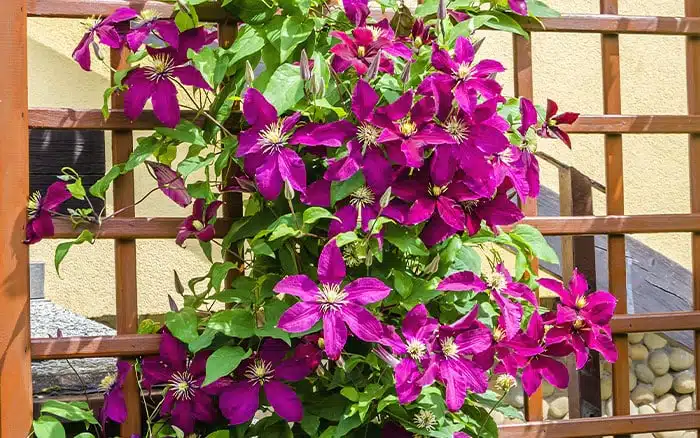
Clematis are classic climbers and, fortunately, don’t need heavy-handed training. Their leaf stalks naturally twine around supports, so your job is mostly to guide them early on. Check the label when buying a new clematis to see which pruning group it falls within: 1, 2 or 3. If it belongs to pruning groups 2 or 3, tying in a few main stems horizontally can encourage flowering shoots. This helps create more flowering shoots along their length. Just be gentle, as the stems can be surprisingly brittle.

Honeysuckle
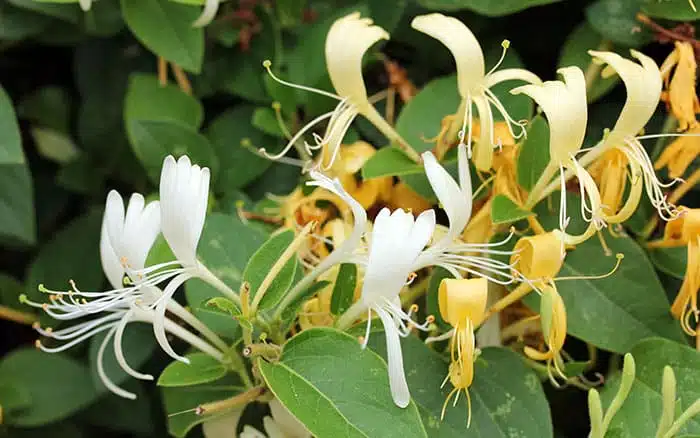
Honeysuckle is a vigorous twiner that can quickly get out of hand if ignored. In its early days, loosely tie the main shoots to a support, spacing them out to avoid congestion. This is especially important when training climbers as they become established. It responds well to being fanned out rather than bundled together. Once established, a bit of regular pruning keeps it tidy and flowering well.
Jasmine
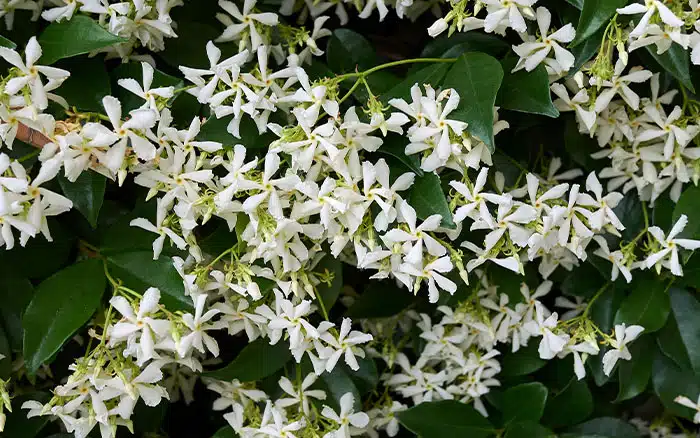
The hardy star jasmine, Trachelospermum, is a great choice for its glossy leaves and scented flowers. However, it does need a bit of guidance. It won’t cling on its own, so you’ll need to tie in the stems as they grow. Try training a few strong leaders horizontally, as this slows upward growth and encourages lateral shoots. This gives you a fuller, more even cover.
Passionflower
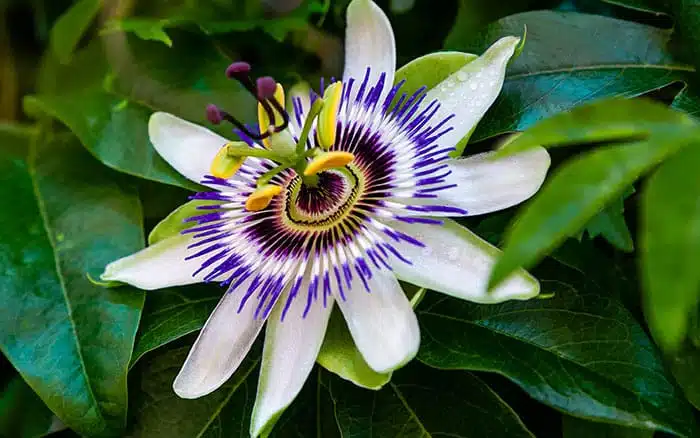
Passionflowers grow quickly and can cover a space in no time. They climb using tendrils, which latch onto supports easily, but the plant benefits from early direction. Guide the main shoots where you want coverage, then let it do its thing. However, be prepared to step in with pruning if it starts heading somewhere inconvenient, like into the guttering. Also, make sure you choose the hardy species, Passiflora caerulea. Many of the others available are tender and won’t withstand a hard frost.
Climbing hydrangea
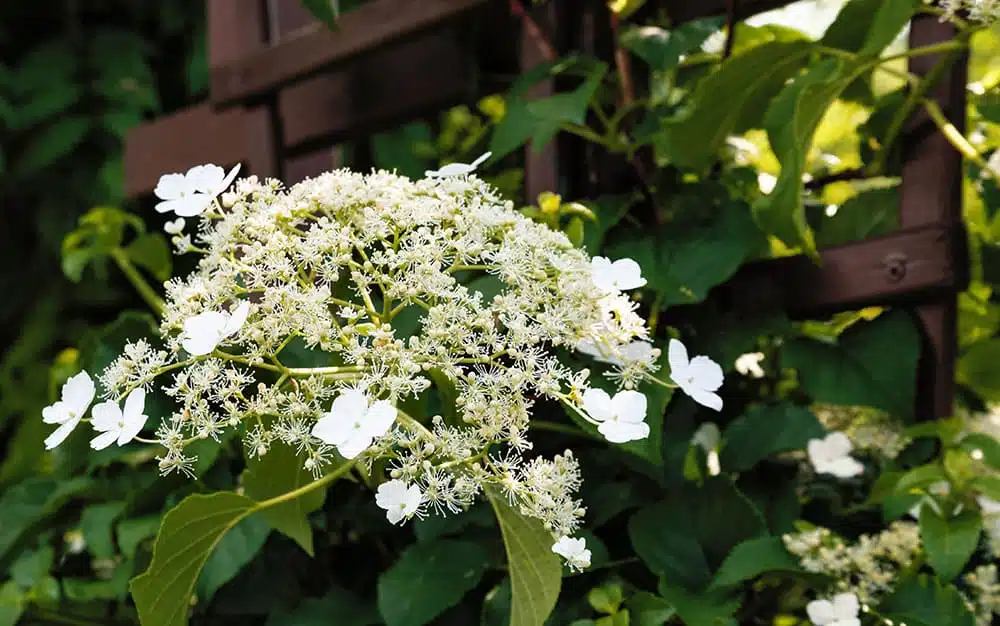
Although climbing hydrangea, H. anomala subsp. petiolaris, takes its time to get going, it’s well worth the wait. Once established, it not only grows very quickly but is also one of the easiest climbers to grow. It self-clings to walls using its aerial roots. It has the added advantage of growing happily in part to full shade, as well as full sun. Early training is mostly about tying in young shoots. This helps guide it in the direction you want it to grow.
Grow horizontal
A useful and easy tip for training climbers is this. Bend and tie stems horizontally where possible. This allows growth and flowering hormones to flow from the top of the stem along its length. As a result, the plant produces lots of side flowering shoots.
Keep it loose
Keeping ties loose is important when training climbers, because stems thicken as they grow. When tying in stems, always allow room for them to expand widthways. Soft ties, garden twine, or even old strips of fabric work well. Check them every so often to make sure they’re not cutting into the plant as it thickens. If necessary, be prepared to loosen or replace them with a looser set of ties. Never use metal ties, as they can cut into the stems.

Make the effort now
It’s tempting to let a young climber get on with it. However, a little early intervention when training climbers saves a lot of hassle untangling matted stems later. All you have to do is establish the stem framework. Once they are in place, the plant can do the rest with very little intervention. The exception is tying down stems horizontally, of course, which will produce even more flowers.
Frequently Asked Questions




Leave A Comment