
Discover ten drought-tolerant plants bringing colour, texture and wildlife value to gardens in August 2026.
The holiday season is upon us, and as the continuing run of sun and no rain continues, here are ten of the best plants. They will not only delight with their flowers at this time of year, but also mainly withstand drought conditions. This makes them ideal candidates to plant in August 2026, once weather conditions allow.
1. Echinops ritro ‘Veitch’s Blue’ (Globe thistle)
What could be more cooling to look at on a scorching-hot summer’s day than the deep, steely-blue flowers? This cultivar produces pompom-shaped flowers that are beloved by butterflies and bees. It also makes a great cut and dried flower. Keeping the flower stems intact after flowering will encourage the plant to self-seed. If you don’t want that, simply cut the flower stem down to the ground once flowering has finished. Leaving stems in place also provides seeds for birds later in the year.

- Flowers from August to September
- Hardy
- Grows to 90cm tall and 60cm wide
- Well-drained soil
- Full sun
- Exposed
2. Nepeta subsessilis (Catmint)
This gently spreading species of catmint produces large blue flowers on upright, long, strong stems for weeks on end. It flowers from mid to late summer and looks good planted in the middle of the flower border. It also works well towards the back of the flower border.

- Flowers from July to September
- Hardy
- Grows to 90cm tall and 60cm wide
- Well-drained soil
- Full sun or part shade
- Exposed
3. Origanum laevigatum ‘Herrenhausen’ (Marjoram)
Marjoram are a great group of low-growing, trouble-free plants. They are ideal for including at the front of flower borders. They are not only evergreen but also, when in flower, a magnet for butterflies, bees and other pollinating insects. The flowers of ‘Herrenhausen’ are a delightful mauve-pink colour. They appear at the top of dark red stems.

- Flowers from July to September
- Hardy
- Grows to 45cm tall and 60cm wide
- Well-drained soil
- Full sun
- Exposed
4. Digitalis lutea (Foxglove)
Although our native foxglove is a biennial, D. lutea is classed as a short-lived perennial. It has the added benefit of self-seeding once established. It’s an elegant-looking plant when in flower. It produces tall, slender spikes of small, soft lemon flowers. These appear from a base of long, shiny, dark-green leaves. It grows well in sun as well as shade, as long as the soil is well-drained.
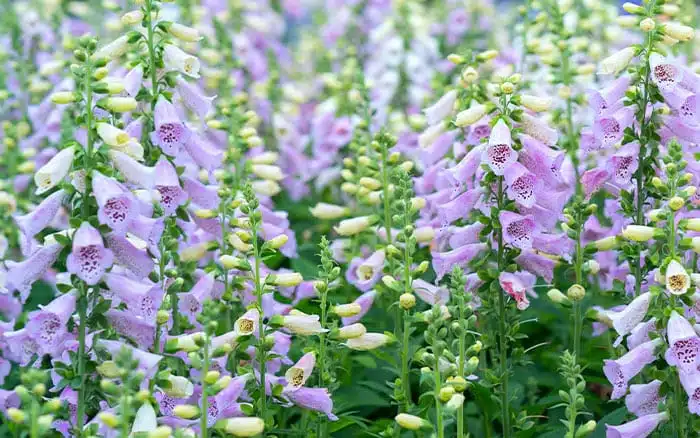
- Flowers from June to September
- Hardy
- Grows to 90cm tall and 30cm wide
- Well-drained soil
- Sun or shade
- Exposed
5. Campanula ‘Iridescent Bells’ (Bellflower)
This charming, free-flowering, versatile, herbaceous perennial produces a profusion of long, bell-shaped, soft lilac flowers. These are carried on upright, leafy stems from early summer to early autumn. Happily, it requires no staking. It’s worth cutting away some or all of the flowered stems to encourage a second flush of flowers.
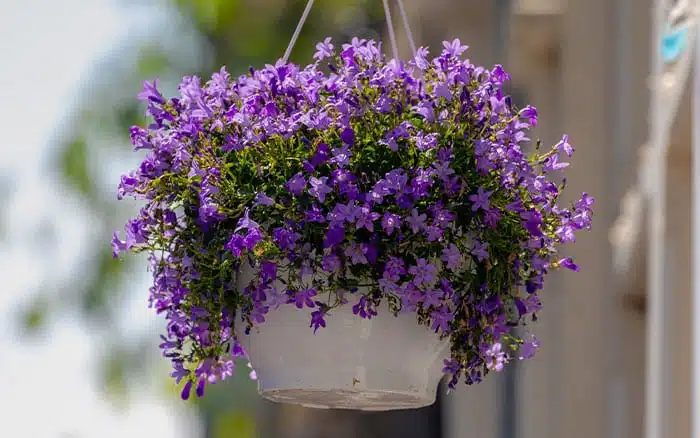
- Flowers from June to September
- Hardy
- Grows to 75cm tall and 45cm wide
- Well-drained soil
- Full sun or part shade
- Exposed
6. Buddleja davidii ‘Sugar Plum’ (Butterfly bush)
The wonderful thing about H. paniculata and its cultivars is their versatility. Unlike other types, they are quite happy growing in full sun or dappled shade. For July 2026, ‘Pink Diamond’ brings long-lasting colour into the garden. They are easy to identify in flower. Unlike lacecap and mophead hydrangeas, paniculata flowers are cone-shaped. This deciduous shrub will bloom continuously until autumn. It produces creamy-white flowers that ultimately fade to a striking deep pink.
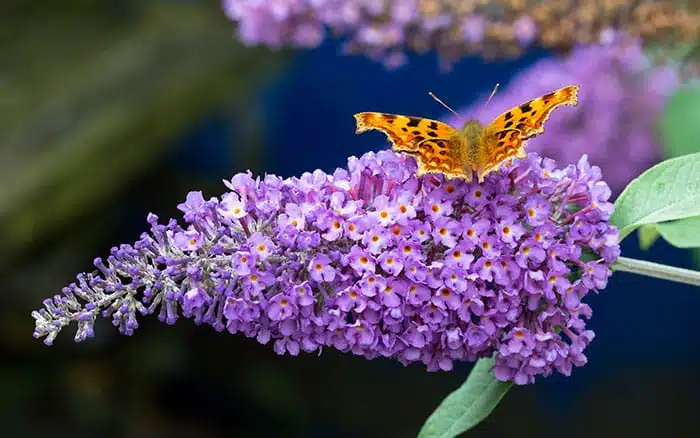
- Flowers from July to September
- Hardy
- Grows to 200cm tall and 200cm wide
- Well-drained, fertile, moist soil
- Full sun to part shade
- Exposed
7. Stipa ichu (Ichu feather grass)
Another plant ideal for drought conditions is this RHS award-winning ornamental grass. Unusually for Stipa, it has an upright habit. It looks particularly stunning in August 2026, with arching silver-white plumes that last well into autumn. It makes a great accent plant dotted throughout the border. Cut back in early spring to encourage fresh young growth.

- Flowers from July to October
- Hardy
- Grows to 90cm tall and 50cm wide
- Moderately fertile, well-drained soil
- Full sun
- Exposed
8. Santolina rosmarinifolia ‘Primrose Gem’ (Cotton lavender)
This rounded-shape, evergreen shrub thrives in full sun. It has the added advantage of aromatic, yellow-green leaves with pretty, cheerful, lemon-yellow, pin-head-shaped flowers. It is ideal for rockeries as well as borders. Best given winter protection if growing in colder areas. In spring, cut back flowered shoots to just above old growth.

- Flowers from July to August
- Borderline hardy
- Grows to 50cm tall and 100cm wide
- Well-drained soil
- Full sun
- Sheltered
9. Choisya ternata ‘Scented Gem’ (Mexican orange blossom)
A lovely evergreen, drought-tolerant plant, once established, with aromatic, dark-green leaves. It has the added advantage of producing clusters of highly scented, star-shaped white flowers. These appear not just once but twice a year, in spring and autumn. This low-maintenance shrub will give much-needed year-round structure in the garden. It also provides scent and pretty flowers.

- Flowers from August to October and April to May
- Hardy
- Grows to 250cm tall and 250cm wide
- Moderately fertile, well-drained soil
- Full sun or light shade
- Exposed
10. Polystichum rigens (Prickly holly fern)
Dry shade, particularly during late summer, can be one of the hardest spots to fill with suitable plants. Most Polystichum ferns will grow well in the shade. This fully hardy, relatively short, clump-forming species is the ideal choice for the front of a dry, shady border. It is a useful choice for difficult spaces in August 2026.

- Flowers – None
- Hardy
- Grows to 40cm tall and 50cm wide
- Most soil types
- Shade
- Exposed
For more great gardening advice, make sure you head to my YouTube Channel. Make sure you’re subscribed with notifications on so you don’t miss any of my new videos.




Leave A Comment