
Discover ten standout plants bringing flowers, foliage and vibrant colour to gardens in September 2026.
September is the month when a surprising number of plants start to produce brightly coloured flowers. They take advantage of the late-season sun and mild conditions.
Colour can also be found in the leaves of certain trees and shrubs as they start to change. Green foliage develops varying shades of red, orange and yellow.
Choose the right cultivars, and the garden can erupt into a veritable firework display of colour. For September 2026, here are my top ten picks.
1. Hylotelephium (Atropurpureum Group) ‘Xenox’ (Ice Plant)
Many sedums, as they were previously called, come into their own at this time of year. They produce large, rounded, flat flowerheads on stout stems.
‘Xenox’ is a particularly good cultivar, producing numerous tiny red flowers. The plant itself grows into a neat, mounded shape with dusky-purple leaves that look good all season.

- Flowers from August to October
- Hardy
- Grows to 30cm tall and 30cm wide
- Well-drained soil
- Full sun
- Exposed
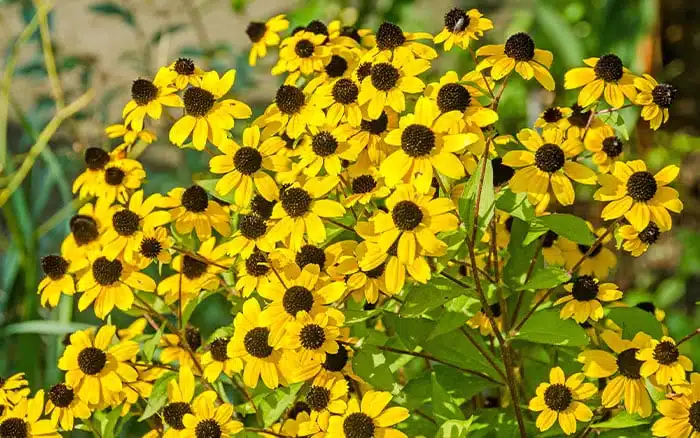
2. Rudbeckia triloba (Black-eyed Susan)
Another easy-to-grow, airy and upright, late-season flowering herbaceous perennial, Rudbeckia triloba provides invaluable late-season colour.
Then, it produces black-centred, rich-yellow flowers on slender, branched stems right through until October.
- Flowers from August to October
- Hardy
- Grows to 90cm tall and 75cm wide
- Well-drained soil
- Full sun
- Exposed
3. Chrysanthemum ‘Beechcroft Apricot’ (Hardy chrysanthemum)
Hardy chrysanthemums are enjoying a resurgence in popularity, and rightly so. Many provide long bursts of colour well into late autumn and early winter.
‘Beechcroft Apricot’ is an old variety producing apricot-coloured buds. These open into pretty, large, semi-double, pinky-apricot flowers, which continue until December.
Additionally, it is also great for cut flowers.

- Flowers from September to December
- Hardy
- Grows to 100cm tall and 60cm wide
- Well-drained soil
- Full sun
- Exposed
These pretty, slender-stemmed, branched herbaceous perennials are a wonderful addition to any flower border.
They create a see-through effect without shading out other plants and flower for weeks on end. Plus, this easy-to-establish plant produces masses of tiny, pretty, pink flowers at the top of the stems.

- Flowers from June to October
- Hardy
- Grows to 110cm tall and 45cm wide
- Well-drained soil
- Sun or part shade
- Exposed
5. Panicum virgatum ‘Warrior’ (Switch grass)
These upright-growing grasses come into their own during the early autumn months. Their leaf colour subtly changes from green to warm red with bronze undertones.
Airy, reddish-pink spikelets also appear, waving gently in the breeze and creating a delightfully hazy look.

- Flowers from August to October
- Hardy
- Grows to 100cm tall and 120cm wide
- Well-drained, moderately fertile, moist soil
- Full sun
- Exposed
6. Liquidambar styraciflua ‘Worplesdon’ (Sweet gum)
If you have the room, this is a stunning tree with large, shiny, bright-green, star-like leaves.
These turn glorious shades of purple, orange and yellow during autumn, making it a stand-out tree at this time of year.
It’s not particularly fast-growing but is long-lived. It is best planted in grass as a specimen tree in larger gardens.

- Flowers in May
- Hardy
- Grows to 20m tall and 10m wide
- Moist, well-drained, rich soil
- Full sun
- Exposed
This variety is widely considered to produce some of the most spectacular autumn colour.
Its normally bright-green leaves turn fiery shades of brilliant scarlet. The colour lasts several weeks before the leaves fall, creating a magnificent display.
Be sure to plant it in a sheltered, shady spot, as the leaves can scorch if subjected to harsh winds.
These make wonderful specimen trees. They can also be grown successfully in containers if given adequate moisture throughout the year.

- Flowers in April
- Hardy
- Grows to 400cm tall and 400cm wide
- Well-drained, moderately fertile, moist soil
- Light shade
- Sheltered
8. Anemone hypehensis ‘Hadspen Abundance’ (Japanese anemone)
This long-lived, easy-to-grow, late-season flowering herbaceous perennial forms dense mounds of vine-shaped leaves once established.
This cultivar produces deep-pink flowers with a satiny sheen and pale-pink backs for many weeks.
If the stems are left on the plant once flowering has finished, fluffy seeds will appear. These can provide winter food for birds.

- Flowers from August to October
- Hardy
- Grows to 90cm tall and 75cm wide
- Well-drained soil that ideally remains moist
- Sun or part shade
- Exposed
9. Fatsia japonica (Japanese aralia)
This handsome, large-leaved evergreen shrub is ideal for partly shaded spots in the garden.
Its shiny, large, tropical-looking leaves stand out, transforming an otherwise dull spot. It also produces panicles of showy, creamy-white flowers at this time of year.
It is a great choice as a focal plant for a shady part of the garden. Alternatively, pair it with bamboos in a tropical-style garden.

- Flowers from September to October
- Hardy
- Grows to 400cm tall and 400cm wide
- Well-drained soil
- Grows best in part shade but will take sun if soil remains reliably moist
- Exposed
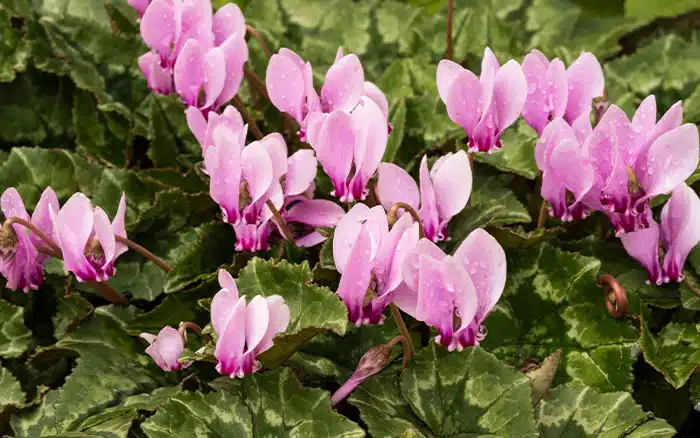
10. Cyclamen hederifolium (Ivy-leaved cyclamen)
This tough, low-growing perennial produces ivy-shaped leaves with pretty, silvery-green patterns.
Dainty flowers range from pink to magenta or white, appearing either before or with the leaves.
Also, it is ideal for planting en masse under or near trees, where the flowers will delight for weeks.
A yearly mulch of leaf mould around the crown in spring will greatly benefit growth and flowering potential.
- Flowers from September to November
- Hardy
- Grows to 15cm tall and 15cm wide
- Well-drained, humus-rich soil
- Part or light shade
- Exposed
For more great gardening advice, make sure you head to my YouTube Channel. Also, make sure you’re subscribed with notifications on so you don’t miss any of my new videos.
Plus, for more seasonal gardening advice, plant inspiration and practical growing tips, sign up to my newsletter.




Leave A Comment