
Stake tall perennials early using supports to prevent flopping, breakage and damage as they surge.
Early spring is the time when herbaceous perennials, dormant all winter, suddenly start to wake up. When conditions are right, they start to push fresh new stems out of the soil. This is especially true on sunny, warm days after a heavy downpour. Those are their ideal growing conditions, and a good time to think about how to stake them.
Whilst it is wonderful to see bright green, fresh-looking leaves and stems appearing throughout the borders, pause for a moment. In a few more weeks, many of those fresh, young shoots can leap to at least 50cm above ground. The problem is that many of the stems may not have hardened up yet. Without support of some sort, they could quite easily snap and break. That is why learning how to stake early really matters.


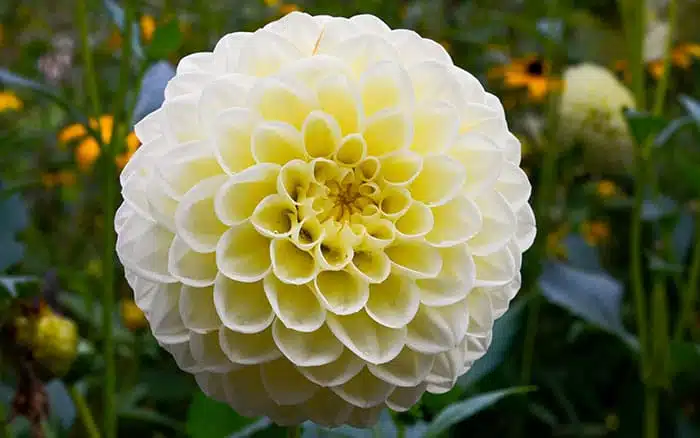
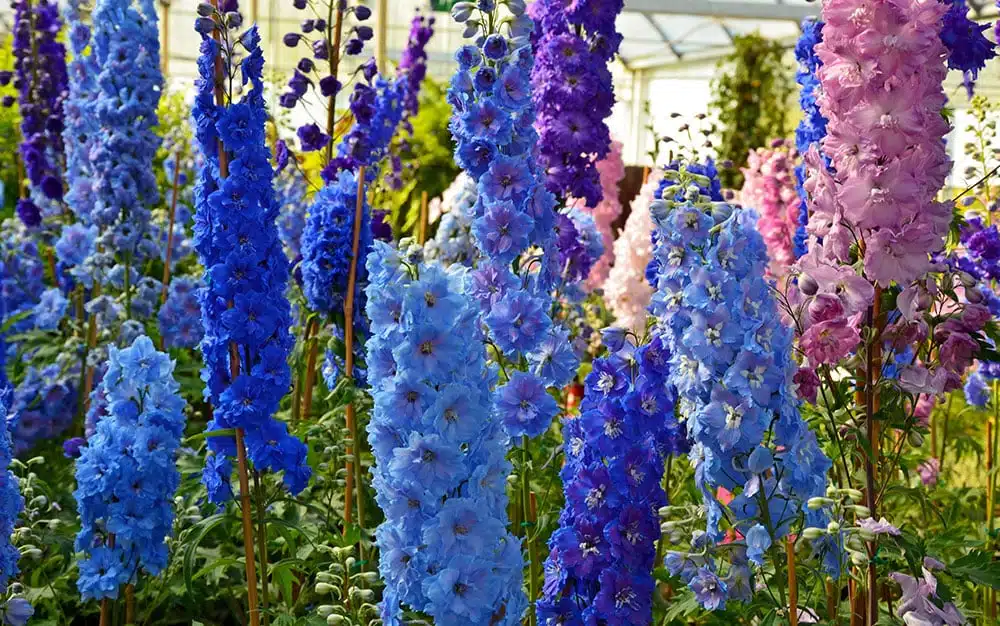
Many border plants benefit from support. Large, sumptuous peony blooms are notorious for flopping after a heavy downpour. Colourful lupin and dahlia flower spikes can also easily be flattened by a gust of wind. It is also essential to stake taller herbaceous plants such as delphinium, sanguisorba, and hardy chrysanthemum.
So, now is the ideal time to start staking those beautiful herbaceous perennials. There is a range of different types and methods of staking that can be used, depending on how to stake each plant.
Circular plant supports

These work best on clump-forming perennials like peonies and alstroemeria. They are available in plastic or metal. This type of support allows the stems to grow up through the grid. They then hang gracefully over the sides. This is one simple way to understand how to stake softer growth.
These are traditionally used to make a frame. Twine or jute is then threaded onto and around it. This creates a framework for tall annuals such as sweet peas to grow up.

Pea sticks

This is a great way of using twiggy prunings. When pushed into the ground, they provide a support base for asters and heleniums as they start to grow away. They also support annual veg such as dwarf French beans, peas, and mangetout.
Hazel, birch, and willow prunings
These are becoming more popular with gardeners seeking a more natural look. They can be woven into loose circles around hazel stems pushed into the ground. Emerging plant stems can then be gently threaded through them. This natural approach also shows how to stake plants discreetly.

So, a little time spent now putting a range of different stakes in place will bring huge dividends in a few weeks. It can also save you the potential heartache of stepping on newly emerging plants. That often happens when you suddenly realise those herbaceous perennials do need staking after all. A little early thought about how to stake can help prevent that.
For more great gardening advice, make sure you head to my YouTube Channel. Make sure you’re subscribed with notifications on so you don’t miss any of my new videos.
Frequently Asked Questions




Leave A Comment