
Find out some great plants to add colour and interest to your January 2026 garden.
January 2026 can be seen as a bleak month. But it’s surprising just how much winter interest there can be in the garden at this time of year! Here’s ten of the best-looking plants:
1. Daphne bholua ‘Jacqueline Postill’ (Daphne)
This semi-evergreen, upright cultivar produces sweetly scented, pink flowers for weeks on end, starting in January 2026. Bred from a species found in the Himalayas, it’s used to cool conditions. But make sure to plant it in a sheltered position as it struggles during harsh winters.

- Flowers: January to February
- Borderline hardy
- Size: 400cm tall × 150cm wide
- Soil: Moderately fertile, moist, well-drained
- Position: Full sun to part shade
- Aspect: Sheltered
This is the perfect shrub to plant in the garden for winter interest. It produces deep, cerise-pink, highly scented flowers, spaced all along the plant’s stems before leaves appear in spring.

- Flowers: November to April
- Fully hardy
- Size: 300cm tall × 250cm wide
- Soil: Fertile, moist
- Position: Part shade
- Aspect: Sheltered
3. Clematis cirrhosis ‘Freckles’ (Clematis)
Evergreen clematis is a great addition to the garden. They give year-round green interest to walls and fences, and one that flowers during the winter is a huge bonus. ‘Freckles’ lives up to its name in that it produces nodding cream bell-shaped flowers heavily speckled with maroon dots. Ideally planted in a sheltered spot with its roots shaded and stems in full sun.

- Flowers: December to February
- Fully hardy if given protection from cold winds
- Size: 350cm tall × 200cm wide
- Soil: Fertile, moisture-retentive well-drained
- Position: Part shade
- Aspect: Sheltered
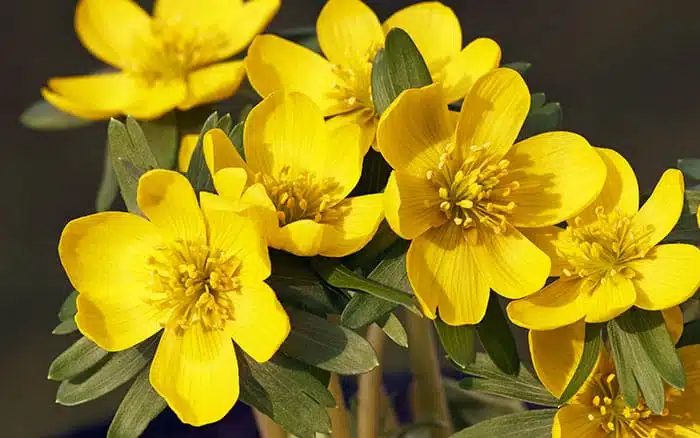
4. Eranthis hyemalis (Winter aconite)
Along with snowdrops, winter aconites are one of the first bulbs to show their colourful, yellow flowers in January 2026. And they naturalise very quickly forming delightful carpets of flowers, particularly when planted under and around deciduous trees.
- Flowers: January to February
- Fully hardy
- Size: 10cm tall × 10cm wide
- Soil: Moist, fertile, well-drained
- Position: Part shade
- Aspect: Sheltered
5. Crocus tommasinianus ‘Ruby Giant’ (Crocus)
Unlike most other crocus that flower in early spring, tommasinianus often come into flower later this month. Especially when planted in milder parts of the country. ‘Ruby Giant’ produces reddish-purple flowers that open to reveal a delightful bright orange stigma.

- Flowers: January to March
- Fully hardy
- Size: 20cm tall × 10cm wide
- Soil: Fertile, acidic, moisture-retentive
- Position: Full sun to part shade
- Aspect: Sheltered
6. Cryptomeria japonica ‘Elegans’ (Japanese cedar)
Conifers are a much under-rated group of evergreen trees and shrubs. And Cryptomeria is one of the best to include in a garden. Unlike most other conifers its leaves are super soft making them very tactile plants. Additionally, the leaves change colour over winter from soft, feathery, light green to a rich bronze-purple with plum tones. They therefore bring cheerful winter colour into the garden.

- Flowers: Insignificant
- Fully hardy
- Size: 350cm tall × 300cm wide
- Soil: Fertile, acidic, moisture-retentive
- Position: Part shade
- Aspect: Sheltered
7. Galanthus elwesii ‘Mount Everest’ (Snowdrop)
This large snowdrop flowers slightly earlier than nivalis and has delightful silvery-green colour leaves. It will naturalise well under trees and around shrubs in January 2026.

- Flowers: January to February
- Fully hardy
- Size: 20cm tall × 10cm wide
- Soil: Moist, fertile, well-drained
- Position: Part shade
- Aspect: Sheltered
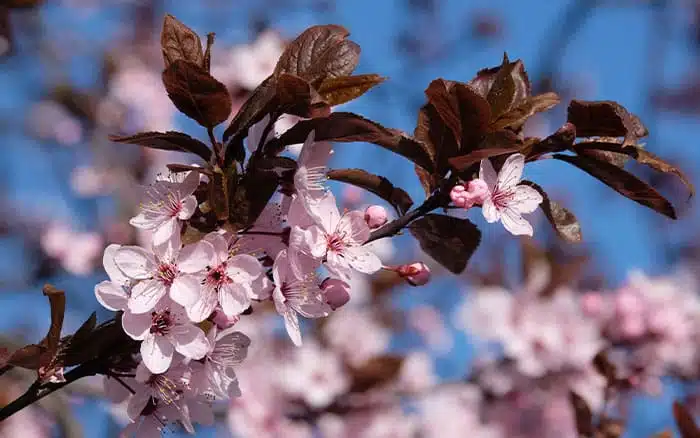
8. Prunus x subhirtella ‘Autumnalis Rosea’ (Winter-flowering cherry)
A classic, much loved winter interest tree that loves to flower during the coldest months of the year. It produces small, delicate- looking, pale pink, flowers on leafless stems sporadically from November all the way through to March. A beautiful, focal point tree for winter/early spring interest.
- Flowers: November to March
- Fully hardy
- Size: 350cm tall × 300cm wide
- Soil: Fertile, moisture-retentive
- Position: Part shade
- Aspect: Sheltered
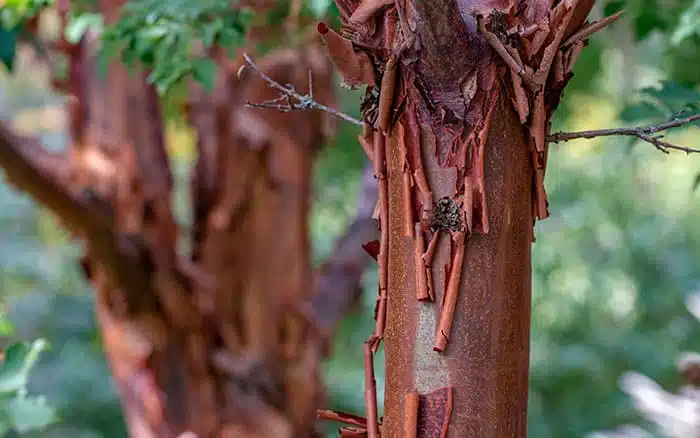
9. Acer griseum (Paperbark maple)
This is the ideal tree to plant in a small to medium size garden in January 2026. Its handsome copper colour, peeling bark is eye catching whatever time of the year it’s seen. Plant it so that its bark is back-lit by low winter sun to obtain the most striking effect.
- Flowers: Small, insignificant flowers in the spring
- Fully hardy
- Size: 450cm tall × 300cm wide
- Soil: Fertile, moisture-retentive
- Position: Part shade
- Aspect: Sheltered
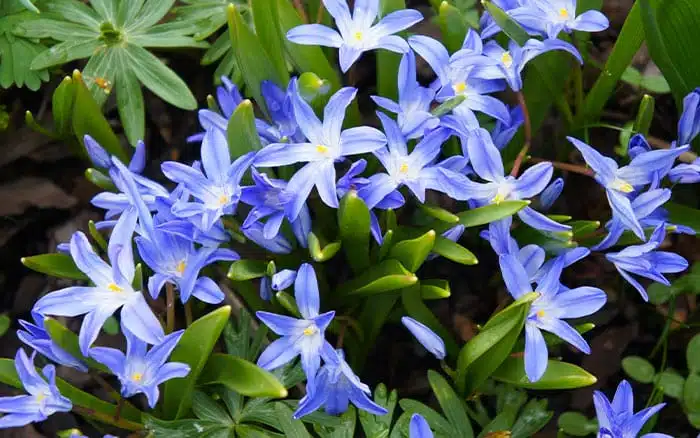
10. Chionodoxa forbesii (Glory-of-the-snow)
A beautiful, easy-to-grow, low-growing bulb that produces bright, star-shaped blue flowers with white centres. It naturalises well and pairs beautifully with snowdrops and aconites.
- Flowers January to February
- Fully hardy
- Size: 10cm tall × 10cm wide
- Soil: Fertile, acidic, moisture-retentive
- Position: Part shade
- Aspect: Sheltered
For more great gardening advice, make sure you head to my YouTube Channel. Make sure you’re subscribed with notifications on so you don’t miss any of my new videos.




Leave A Comment