
Fences don’t just have to serve a practical purpose; they can be a display too.
Garden fences are not generally regarded as things of beauty. Mainly installed for practical reasons such as privacy, security, and to define boundaries, they often end up looking dull and featureless.
But they actually give us ready-made growing opportunities to transform them into vibrant or soothing living walls. Whether you want flowers, foliage, fragrance, wildlife, or year-round interest, there’s a group of plants perfectly suited to growing up against your fence.
CLIMBERS
Climbers are the obvious choice to soften, hide or completely transform a fence.
Advantages
- Can quickly cover unattractive fencing
- Provide flowers, evergreen cover, scent and wildlife value
- Make the most of limited ground space; ideal in small gardens where space is limited
Examples
Clematis are a wonderful group of flowering climbers with flowers, large and small, in a vast range of different colours, that will flower at different times of the year.
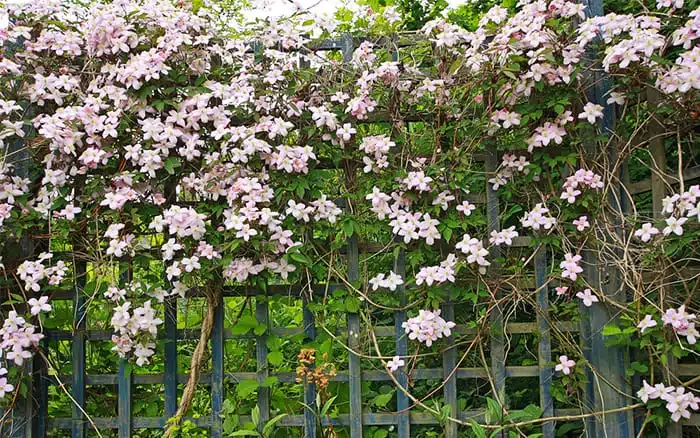
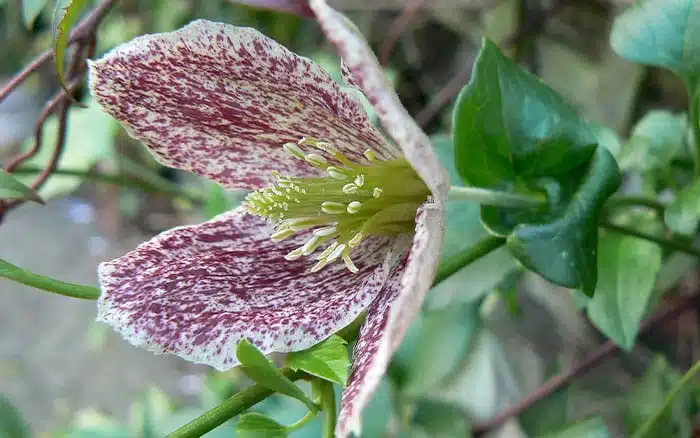
Clematis cirrhosa ‘Freckles’ is an evergreen that produces cream-coloured, heavily red-speckled bell-shaped flowers to lift the spirits during the winter months. Followed in early spring by Clematis armandii, another evergreen, producing sweetly scented white flowers. Try Clematis alpina for late spring, mid-blue flowers. Be careful, though, as some, such as Clematis montana, grow quickly and should only be chosen if the fence is substantial and covers a long distance. You’ll be spoilt for choice for mid to late summer-flowering clematis!

Honeysuckle is a classic cottage garden favourite, with many producing hundreds of delightfully scented flowers throughout the summer months and often into late autumn. Again, caution needs to be exercised as some, like C. periclymenum and its various cultivars, are extremely vigorous, but, on the positive side, often produce exquisitely scented flowers throughout the summer months. Look for less vigorous cultivars such as L. etrusca ‘Superba’. ‘.
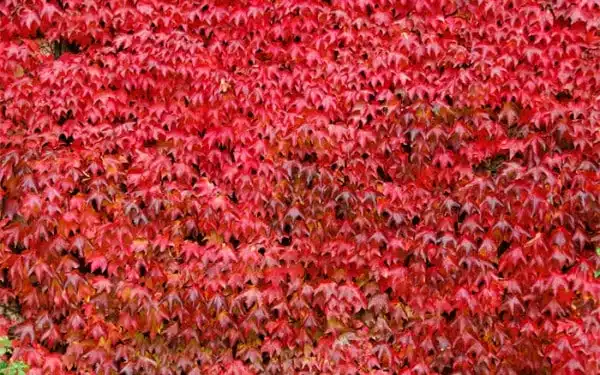
If you have a sturdy, tall fence, then Virginia Creeper delights with wonderful autumn colour, the leaves turning glorious shades of blazing red before they fall.
Roses are Britain’s favourite flower, and it’s easy to see why. Short, repeat-flowering, scented climbers such as orange-flowered ‘Heaven Scent’ or ‘Open Arms’ with soft pink flowers, are ideal choices.
SHRUBS
Shrubs planted along a fence line add lower-level texture and year-round presence and are especially useful if your fence is low.
Advantages
- Can help act as windbreaks and noise buffers
- Provide additional structure and year-round interest
- Give low-level cover for beneficial wildlife
Examples
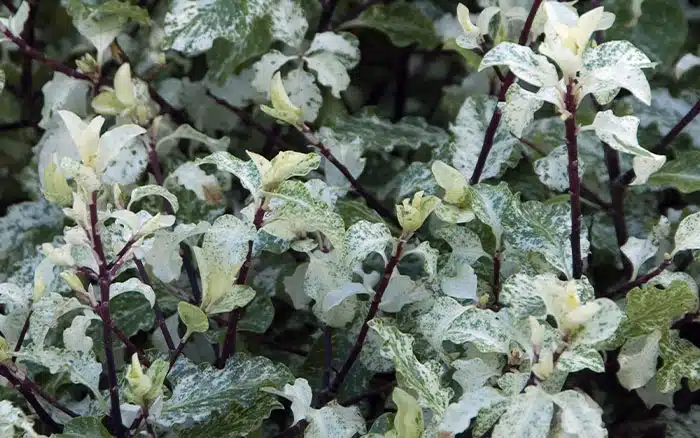
Evergreen Pittosporum is an excellent choice for growing in both sun and part shade. P. ‘Golf Ball’, as the name suggests, has a natural, neat, rounded habit; ‘Irene Paterson’, a delightful, slow-growing cultivar with predominantly white-marked leaves, is ideal for brightening shady areas.
Hydrangea are generally regarded as suitable only for growing in a shady spot in moist soil, but H. paniculata are very happy growing in full sun. ‘Limelight’ produces handsome lime-green tinged cones of flowers throughout the summer months.
Evergreen Pittosporum is an excellent choice for growing in both sun and part shade. P. ‘Golf Ball’, as the name suggests, has a natural, neat, rounded habit; ‘Irene Paterson’, a delightful, slow-growing cultivar with predominantly white-marked leaves, is ideal for brightening shady areas.

Hydrangea are generally regarded as suitable only for growing in a shady spot in moist soil, but H. paniculata are very happy growing in full sun. ‘Limelight’ produces handsome lime-green tinged cones of flowers throughout the summer months.
PERENNIALS
Herbaceous perennials are ideal for planting in front of fences and shrubs to both soften the base, without making the area look too bulky, as well as adding seasonal interest.
Advantages
- Can add long-lasting colour and texture
- Easy to combine with shrubs and climbers
Examples
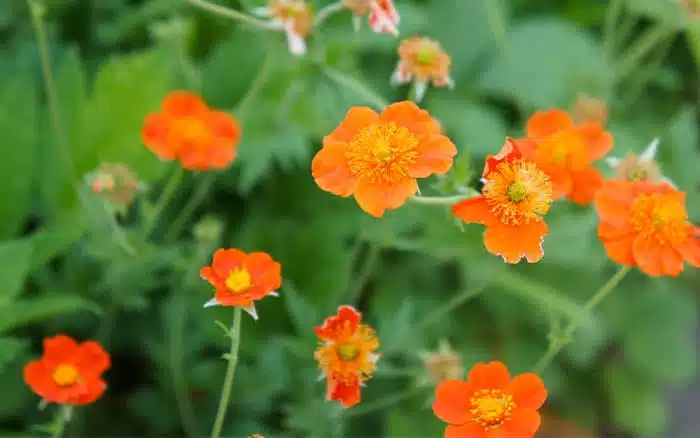
Geraniums and Geums are both great examples of long, repeat-flowering herbaceous perennials. Robust cultivar examples are the magnificent, vividly magenta-flowered Geranium ‘Anne Thomson’ and soft orange-flowered Geum ‘Totally Tangerine’.
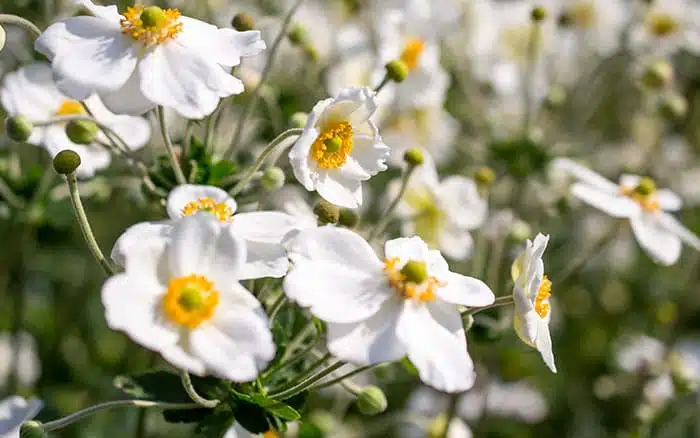
Japanese anemones make great additions to a part-shaded area, flowering late summer into autumn. Choose cultivars such as the white-flowered ‘Honorine Jobert’ or the deep pink Anemone hupehensis var. Japonica ‘Pamina’, which tends not to spread and are thus easier to control in the border.

GRASSES
Ornamental grasses are particularly effective when planted against and along fences, where they both catch the light and sway gently in the breeze.
Advantages
- Many are low-maintenance
- Most produce tall ‘flowering’ spikes that last throughout the winter months
- Their light stems add movement to a static area
Examples
Calamagrostis ‘Karl Foerster’ produces extremely upright ‘flowering’ stems which turn a beautiful, burnished gold from late autumn until early spring
North American Panicum grasses also have a narrow upright habit, but with the addition of gently arching leaves, some of which, as with ‘Shenandoah’, turn a stunning shade of deep red during the autumn. Or if you prefer a different colour palette, Panicum ‘Heavy Metal’ delights with metallic, blue-grey foliage. Miscanthus sinensis ‘Morning Light’ is an elegant, tall, silver-leaved grass with wide, arching leaves.


EDIBLES
Many fruiting edibles are perfect for growing and/or training up and along fences.
Advantages
- Most are easy to train and prune
- Training along a fence makes harvesting easier
- Improved air circulation around the plant helps keep certain plant diseases at bay
Examples
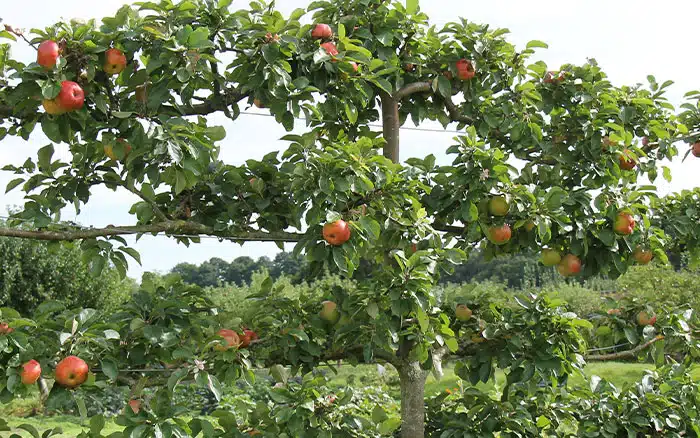
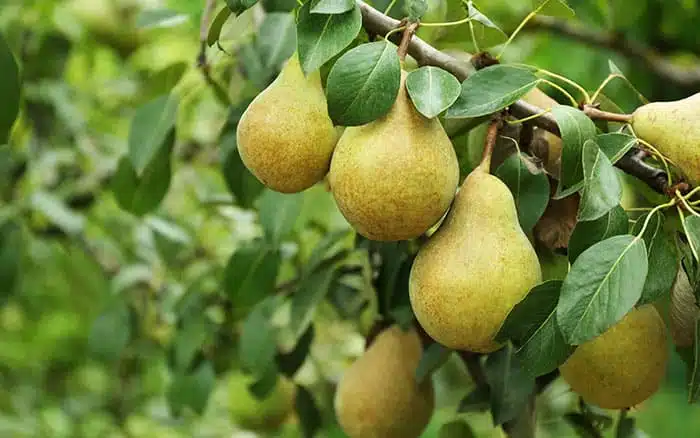
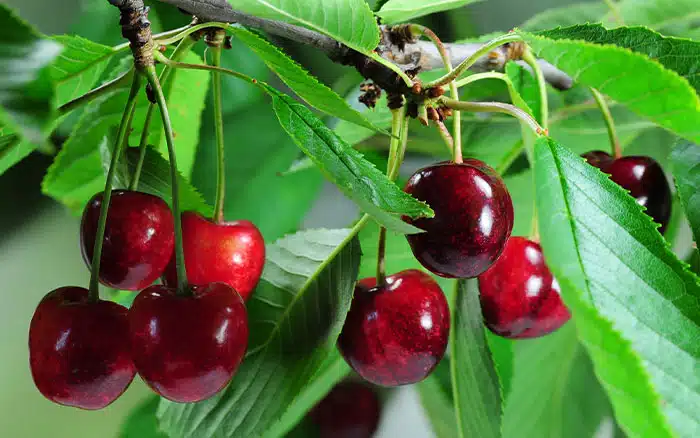
Apples and pears are classically trained along fences in a form known as ‘espalier’. Cherries look magnificent, fan-trained on a fence, and this method makes it easier to protect the fruit from birds as the fruit ripens. Redcurrants can also be trained onto a fence and are ideal for shady areas.
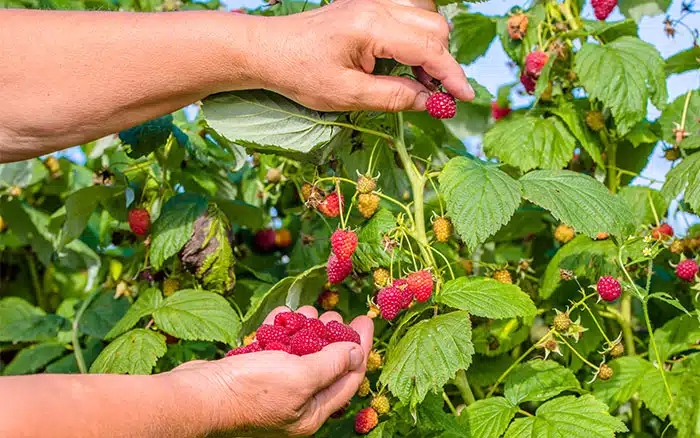
Raspberries grow well in narrow spaces as they have thin, upright canes, and can also be mixed in with perennial flowers. Autumn fruiting varieties do not need protection as birds seem not to take the fruit, possibly because there are so many other ripe berries to choose from at that time of year.
For something a touch unusual, try Japanese Wineberries. Their attractive, red-tinged, arching stems can either be tied onto the fence or allowed to grow freely in between shrubs and perennials.

So the next time you look at your fence, don’t see a problem to hide; instead, see it as a vertical canvas, just waiting to be planted with a whole range of exciting plants.



Leave A Comment